
What to Do After a Math Diagnostic: A 14-Day Study Plan
Use the first two weeks after a math diagnostic to choose priorities, repair specific skills and check new performance across SAT, AP Calculus AB or GAT preparation.

Ideas, systems, and thinking behind a smarter future of learning.

Use the first two weeks after a math diagnostic to choose priorities, repair specific skills and check new performance across SAT, AP Calculus AB or GAT preparation.
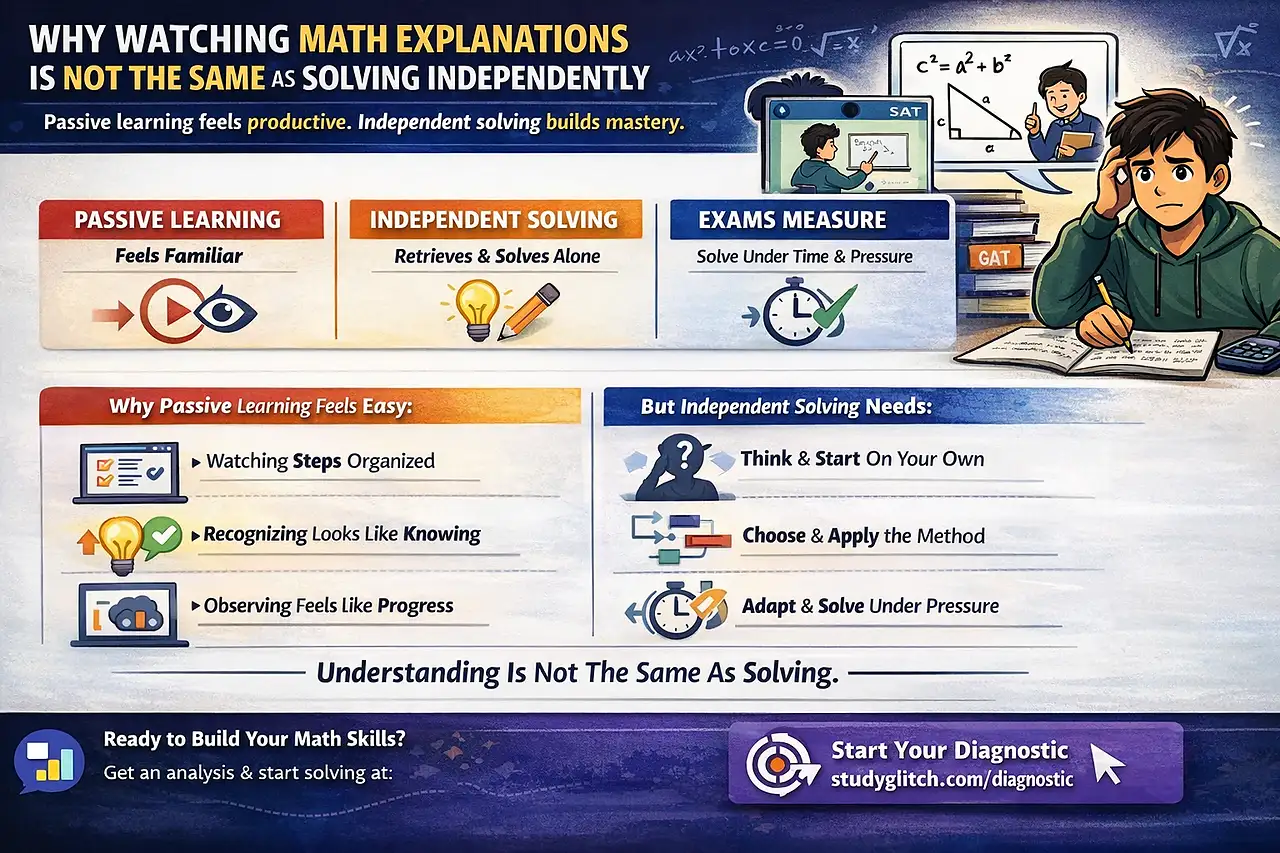
Watching math explanations can feel productive, but exams measure independent problem solving, not passive understanding. This article explains why watching math videos is not enough, how passive learning slows real improvement, & what students need to build independent mastery in SAT, AP, and GAT.
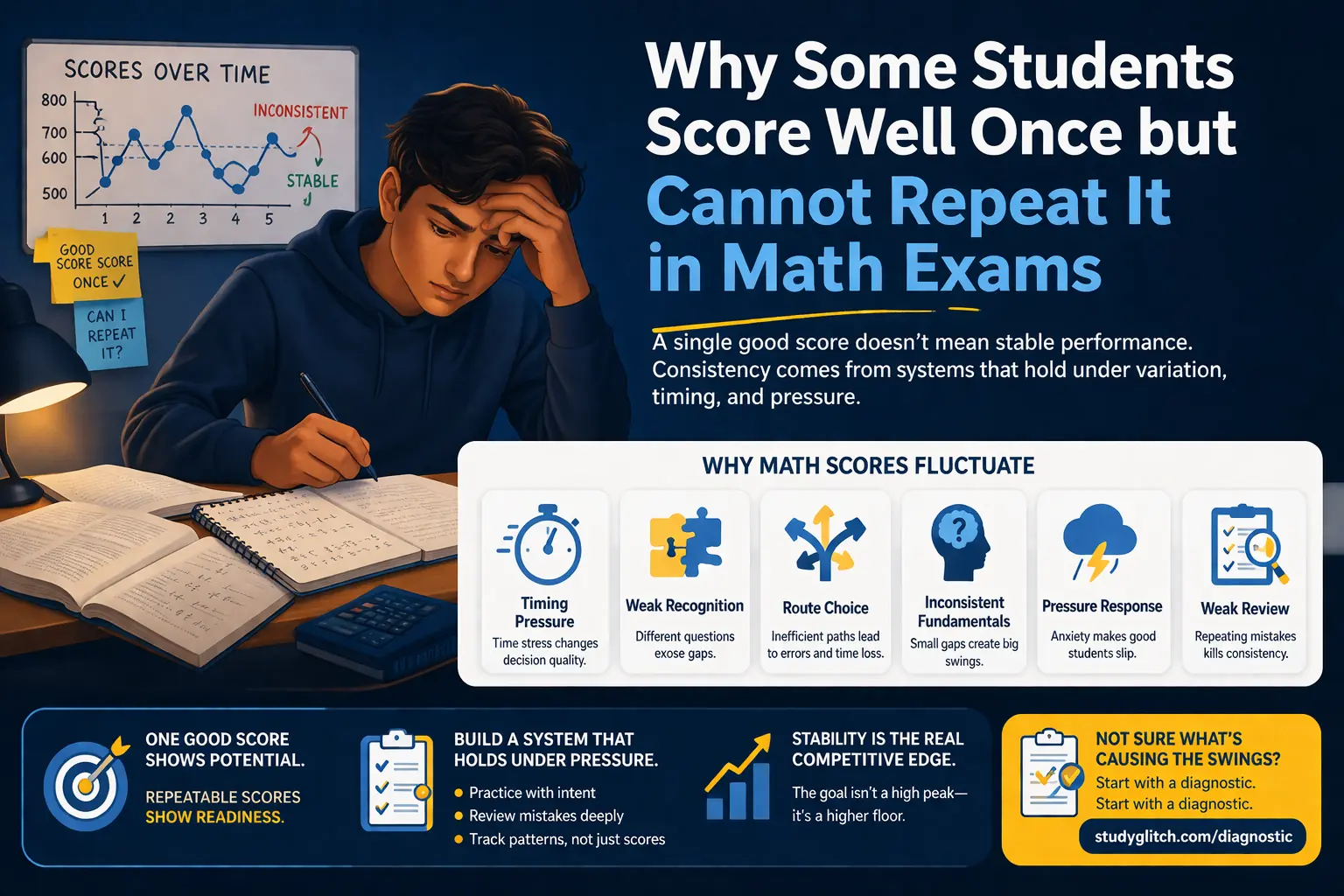
A single good math score does not always mean stable performance. This article explains why math exam scores fluctuate, what causes inconsistent SAT, AP, and GAT results, and why students need preparation systems that stay reliable under timing, variation, and pressure.
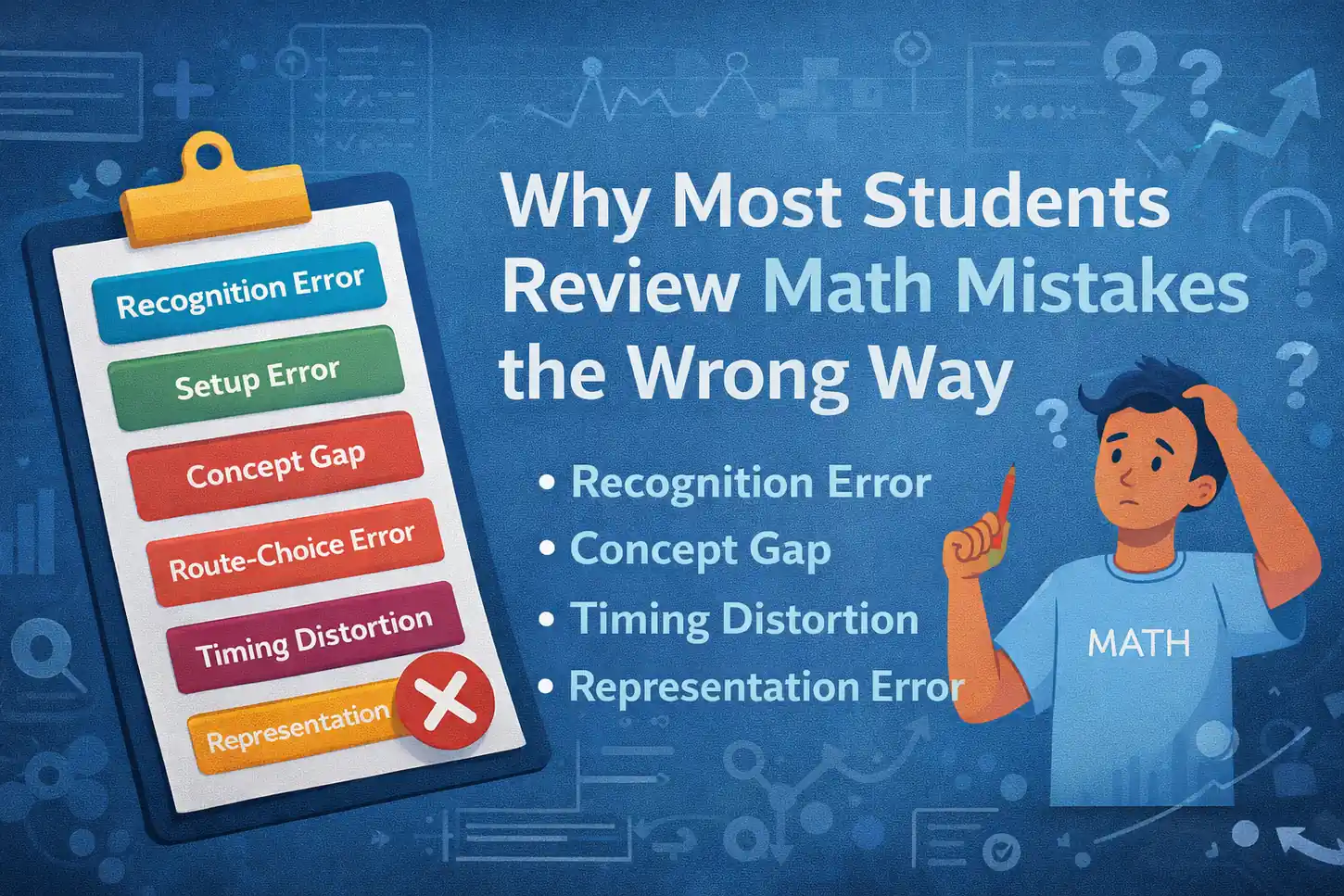
Students often review math mistakes too loosely, which is why the same errors keep repeating. This article explains how to review math mistakes properly through structured error analysis, helping students identify the real cause behind weak performance in SAT, AP, and GAT math.

SAT, AP, & GAT math may overlap in content, but they do not reward the same study habits. This article explains why each needs a different prep system, how students underperform when they use the wrong one, & how to choose the right math preparation pathway based on target exam and current weakness.

SAT Math or AP Calculus AB get buried under books, PDFs, videos, worksheets, and random question without knowing what actually deserves their trust. This article explains why official resources should anchor preparation, when third-party materials can help, and how to build a cleaner prep stack.
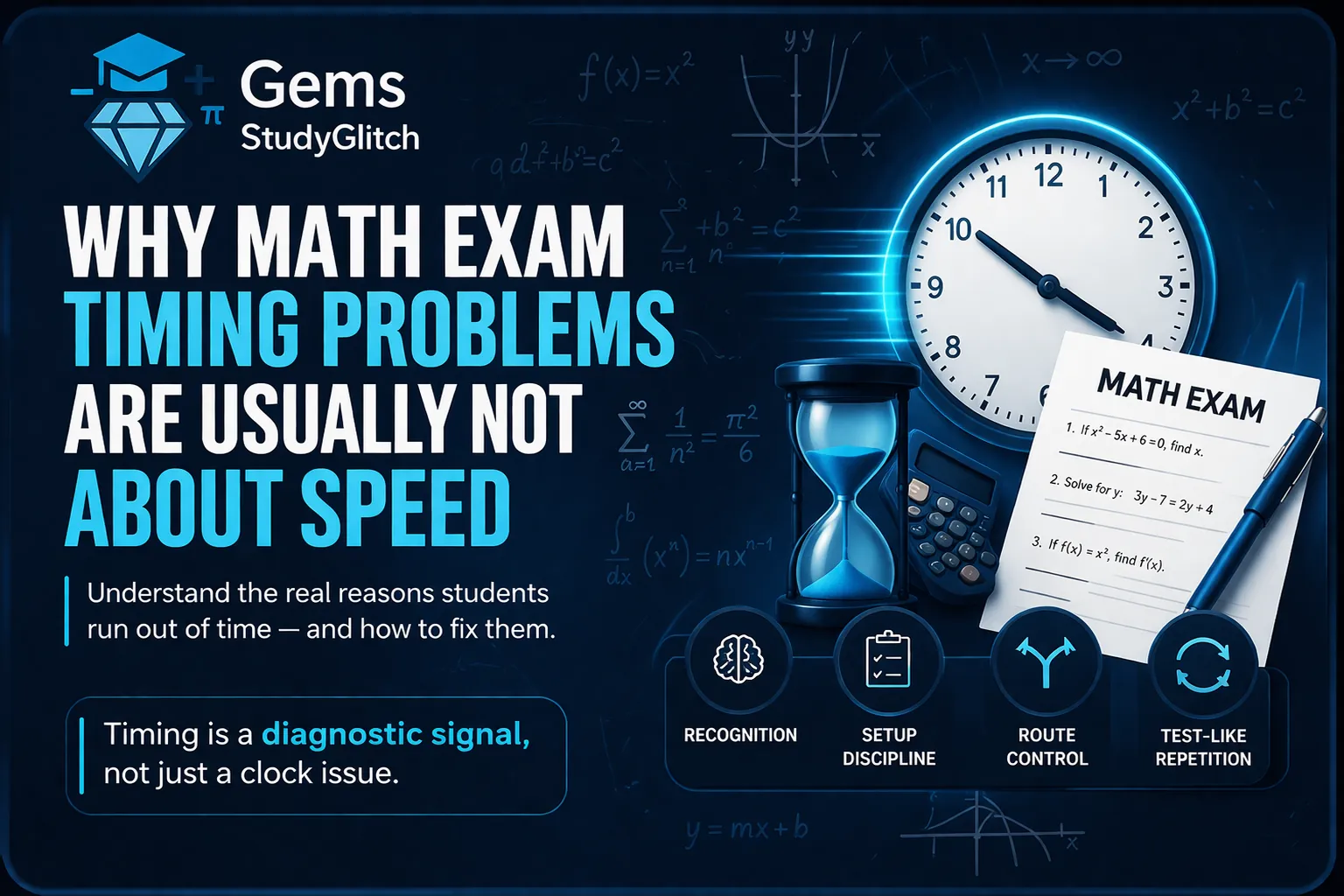
students assume running out of time in math exams means they are simply too slow. In reality, timing problems usually come from hesitation, weak recognition, & poor setup.This article explains why timing should be treated as a diagnostic signal across SAT Math, GAT Quantitative, and AP Calculus AB.

Many students and parents search for SAT, AP, or GAT math tutoring without knowing what actually makes tutoring effective. Strong tutoring should begin with diagnosis, target real weaknesses, use a consistent method, and make progress visible over time.

Real academic progress is not just about attending sessions or finishing homework. For parents in Saudi Arabia, the clearest signs of learning appear in what happens between sessions, how weaknesses improve over time, and whether performance is actually becoming more stable.