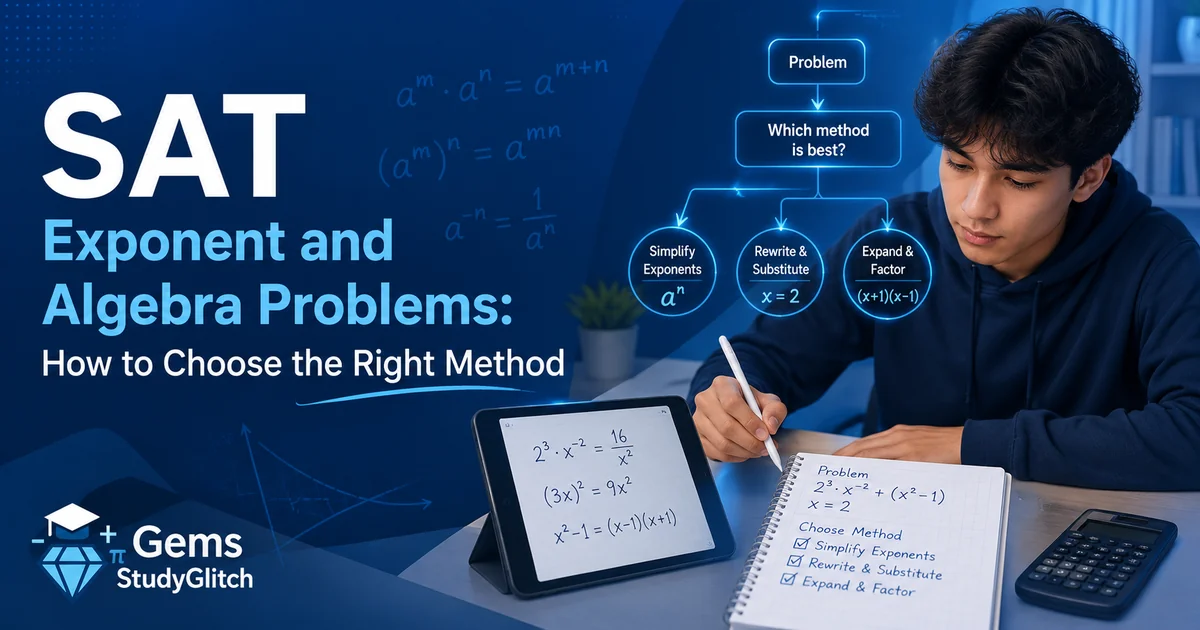
SAT Exponent and Algebra Problems: How to Choose the Right Method
Many SAT exponent and algebra problems are not difficult because of the rule itself. They become difficult when students choose a slow method under time pressure.

Ideas, systems, and thinking behind a smarter future of learning.

Many SAT exponent and algebra problems are not difficult because of the rule itself. They become difficult when students choose a slow method under time pressure.

Standard deviation and regression questions on SAT Math often confuse students because they test interpretation, spread, trends, and context more than long calculation.

SAT Math practice questions only help when students review their method, timing, Desmos use, and mistake pattern instead of solving random problems without direction.

AP Calculus AB tutoring should help students do more than learn procedures. Good support should improve FRQ reasoning, notation, topic connection, timing, and exam-ready problem solving.

Group and individual tutoring can both work, but they solve different problems. The right choice depends on the student’s level, confidence, weak areas, and exam timeline.

The number of tutoring sessions a student needs depends on their starting level, exam deadline, weak topics, timing profile, and how consistently they can practice between sessions.

Before practicing more GAT quantitative questions, students need to know what is actually holding them back: concepts, timing, recognition, or repeated mistake patterns.

For families in Saudi Arabia, the Gulf and wider Middle East, SAT Math tutoring prices can be difficult to compare. Look beyond the hourly rate to live teaching time, format, included support, and total value.

Choosing a GAT or Qudurat tutor is not only about finding someone who explains math. Students need support that identifies weak patterns, builds timing control, and connects practice to real exam behavior.