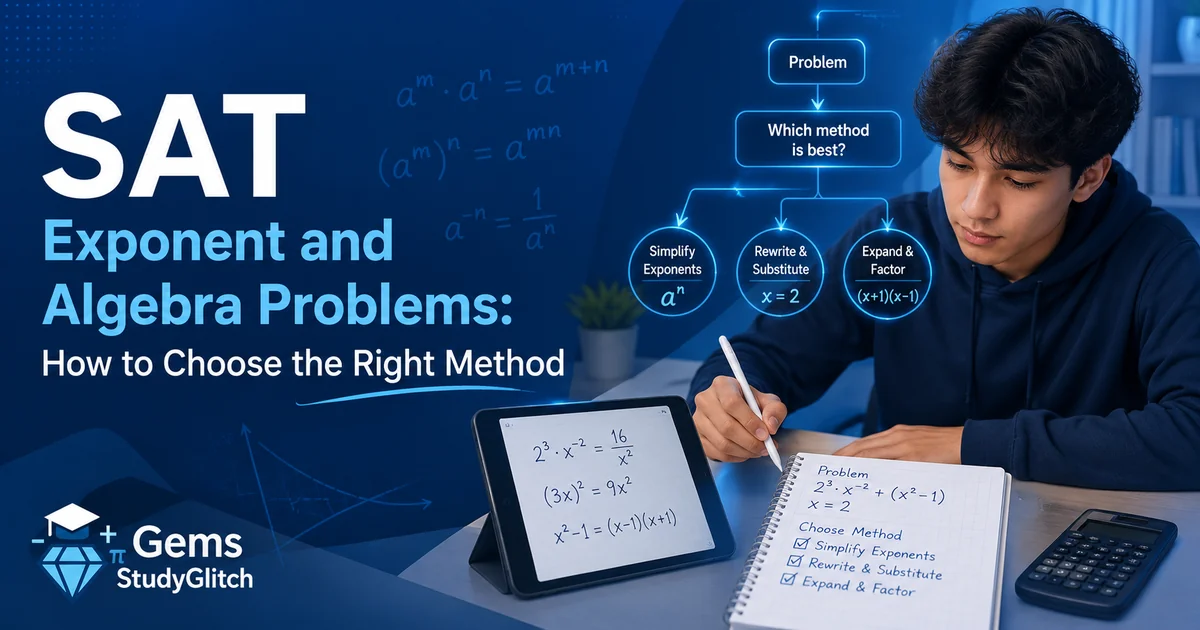
SAT Exponent and Algebra Problems: How to Choose the Right Method
Many SAT exponent and algebra problems are not difficult because of the rule itself. They become difficult when students choose a slow method under time pressure.

Ideas, systems, and thinking behind a smarter future of learning.

Many SAT exponent and algebra problems are not difficult because of the rule itself. They become difficult when students choose a slow method under time pressure.
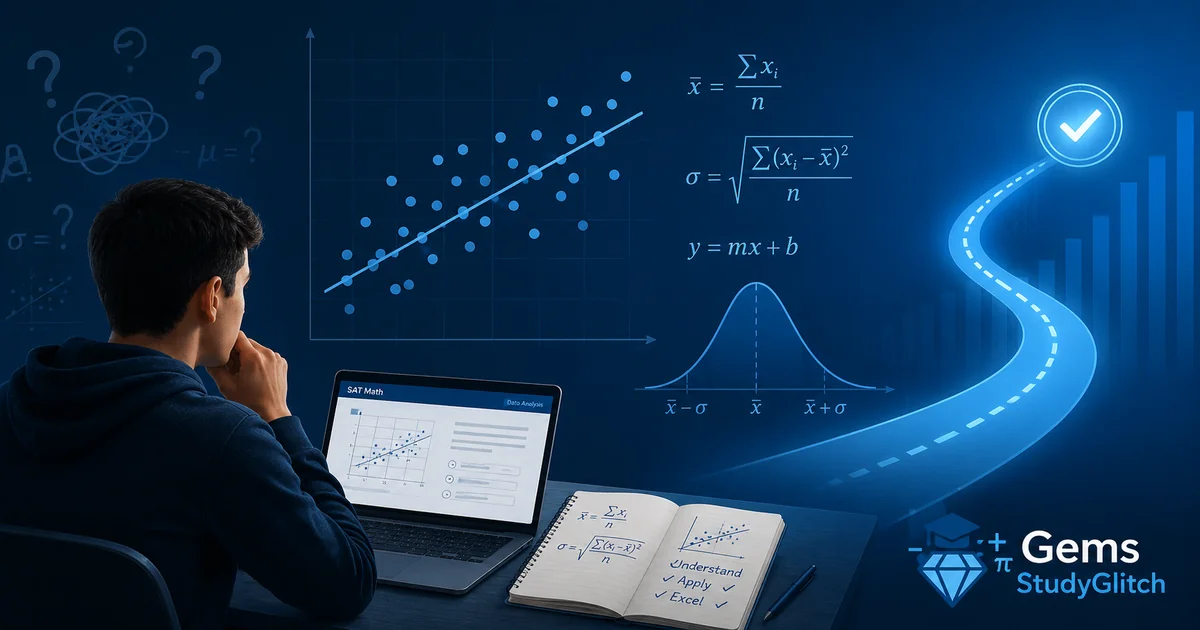
Standard deviation and regression questions on SAT Math often confuse students because they test interpretation, spread, trends, and context more than long calculation.

SAT Math practice questions only help when students review their method, timing, Desmos use, and mistake pattern instead of solving random problems without direction.

Use StudyGlitch free SAT Math, GAT / Qudurat, and AP Calculus AB practice pages to check how you think before studying, test your method during review, and catch traps after learning.
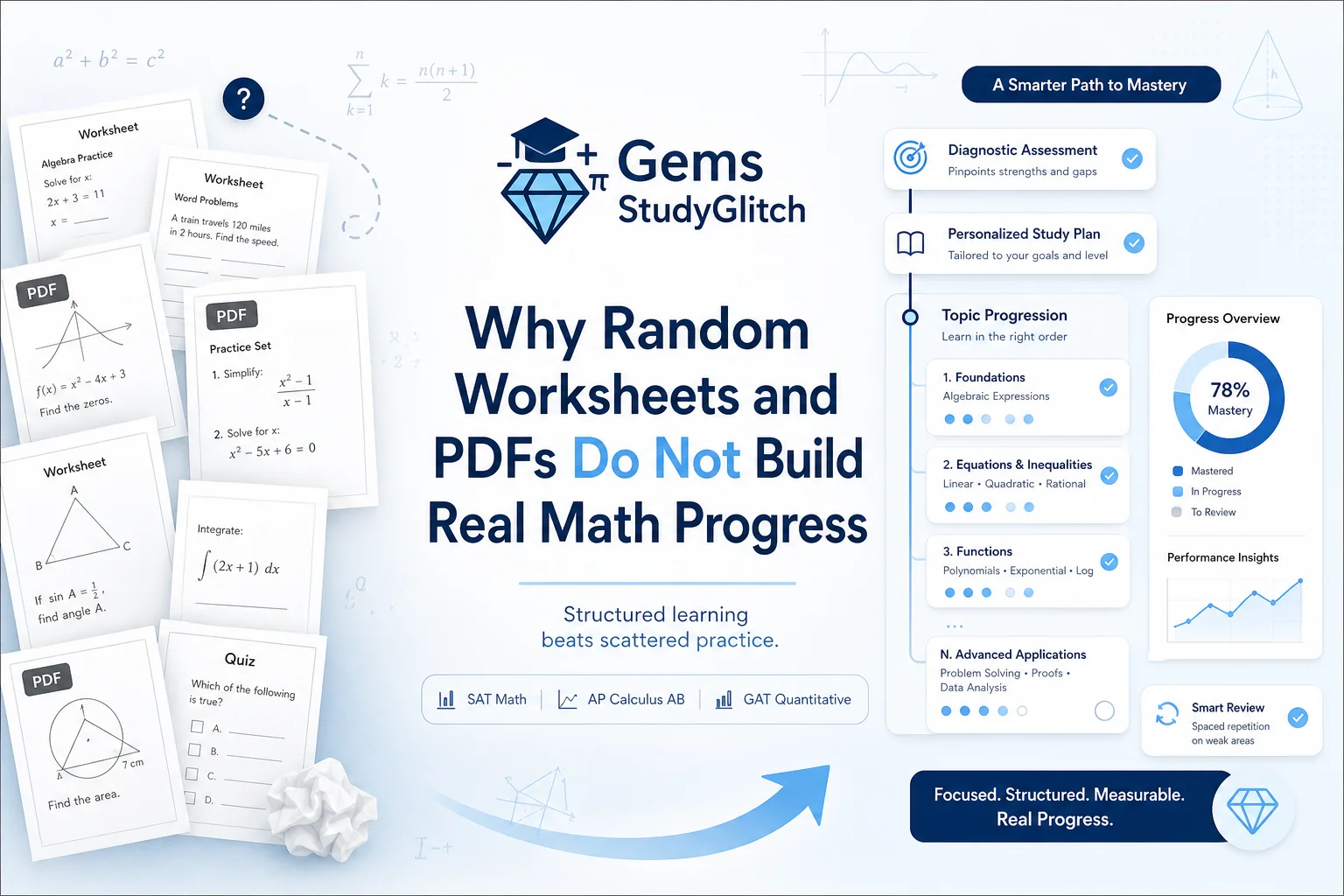
Random worksheets, PDFs, and question sets can help with practice, but they often fail when they are not connected to diagnosis, topic order, performance tracking, and a clear study sequence for SAT Math, AP Calculus AB, or GAT Quantitative preparation.
A useful math progress report should show more than scores. It should explain topic weaknesses, repeated patterns, timing behavior, consistency, score movement, and the next step for SAT Math, AP Calculus AB, or GAT Quantitative preparation.

SAT Math or AP Calculus AB get buried under books, PDFs, videos, worksheets, and random question without knowing what actually deserves their trust. This article explains why official resources should anchor preparation, when third-party materials can help, and how to build a cleaner prep stack.

Students lose valuable SAT Math progress when they depend on DSAT leaks, prediction culture, and polished Desmos TikTok clips instead of real concept mastery. This article explains why leak-based prep creates false confidence, exam shock, and weak decision-making, and why a diagnostic-based SAT Math