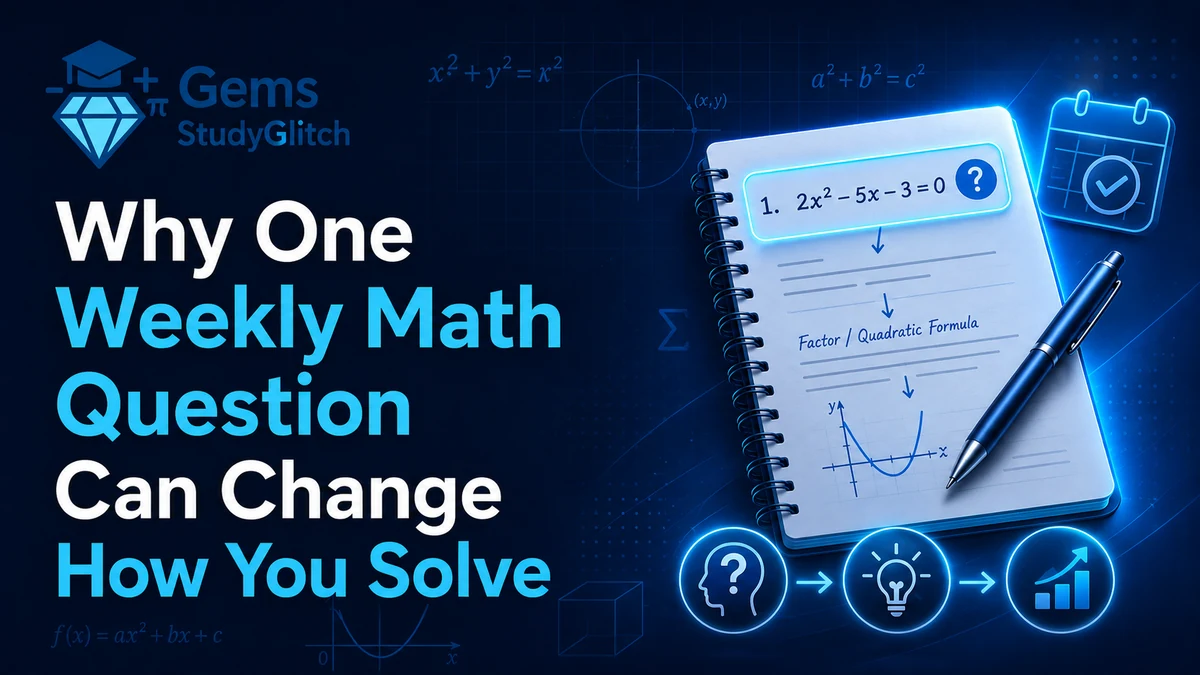
Why One Weekly Math Question Can Change How You Solve
One weekly math question can help students notice traps, compare methods, and discuss better solution paths inside the StudyGlitch Hub.

Ideas, systems, and thinking behind a smarter future of learning.

One weekly math question can help students notice traps, compare methods, and discuss better solution paths inside the StudyGlitch Hub.
Use StudyGlitch free SAT Math, GAT / Qudurat, and AP Calculus AB practice pages to check how you think before studying, test your method during review, and catch traps after learning.
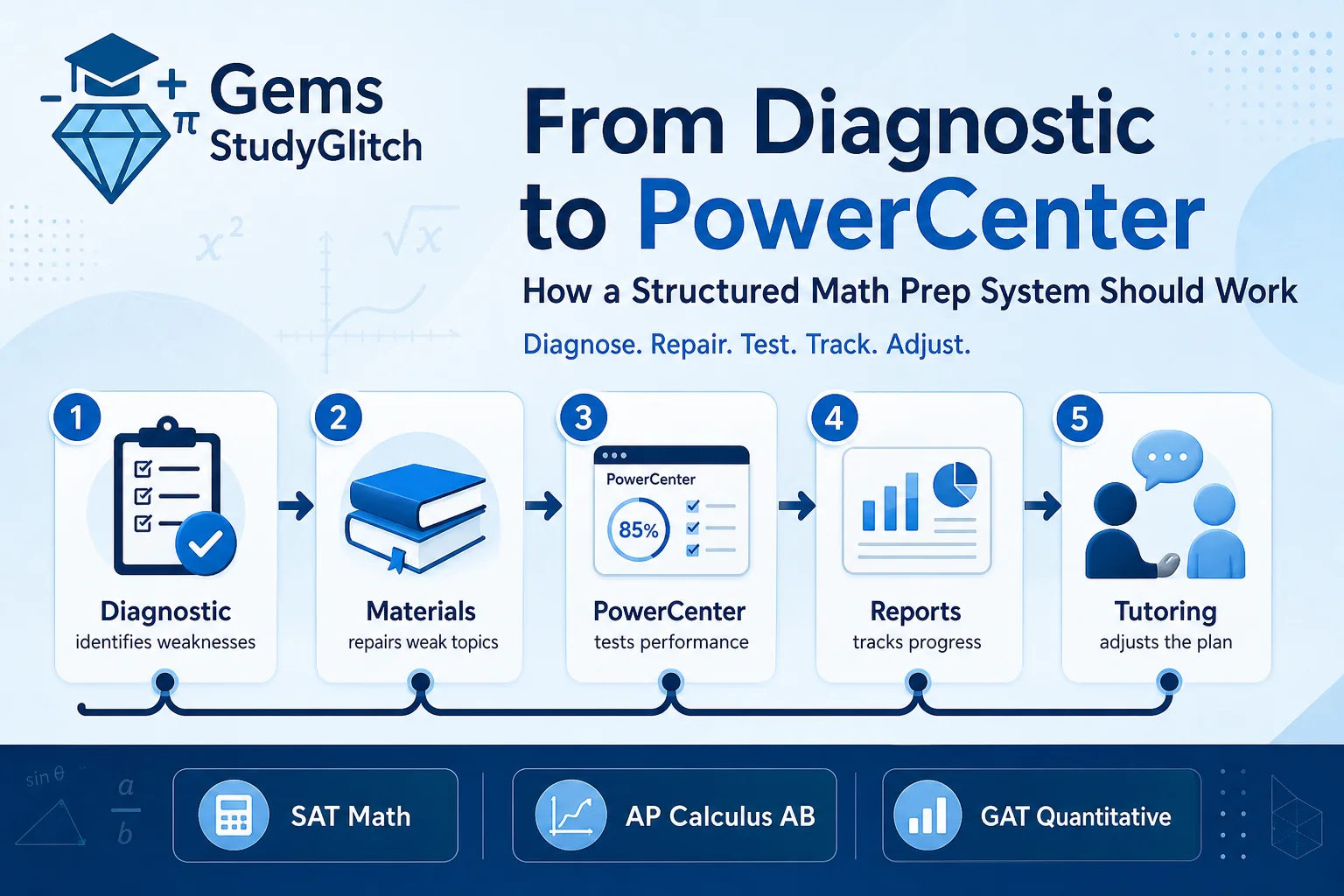
A strong math prep system should connect diagnostic testing, guided materials, practice tests, progress reports, and tutoring support so students know what to fix, how to practice, and when they are improving.
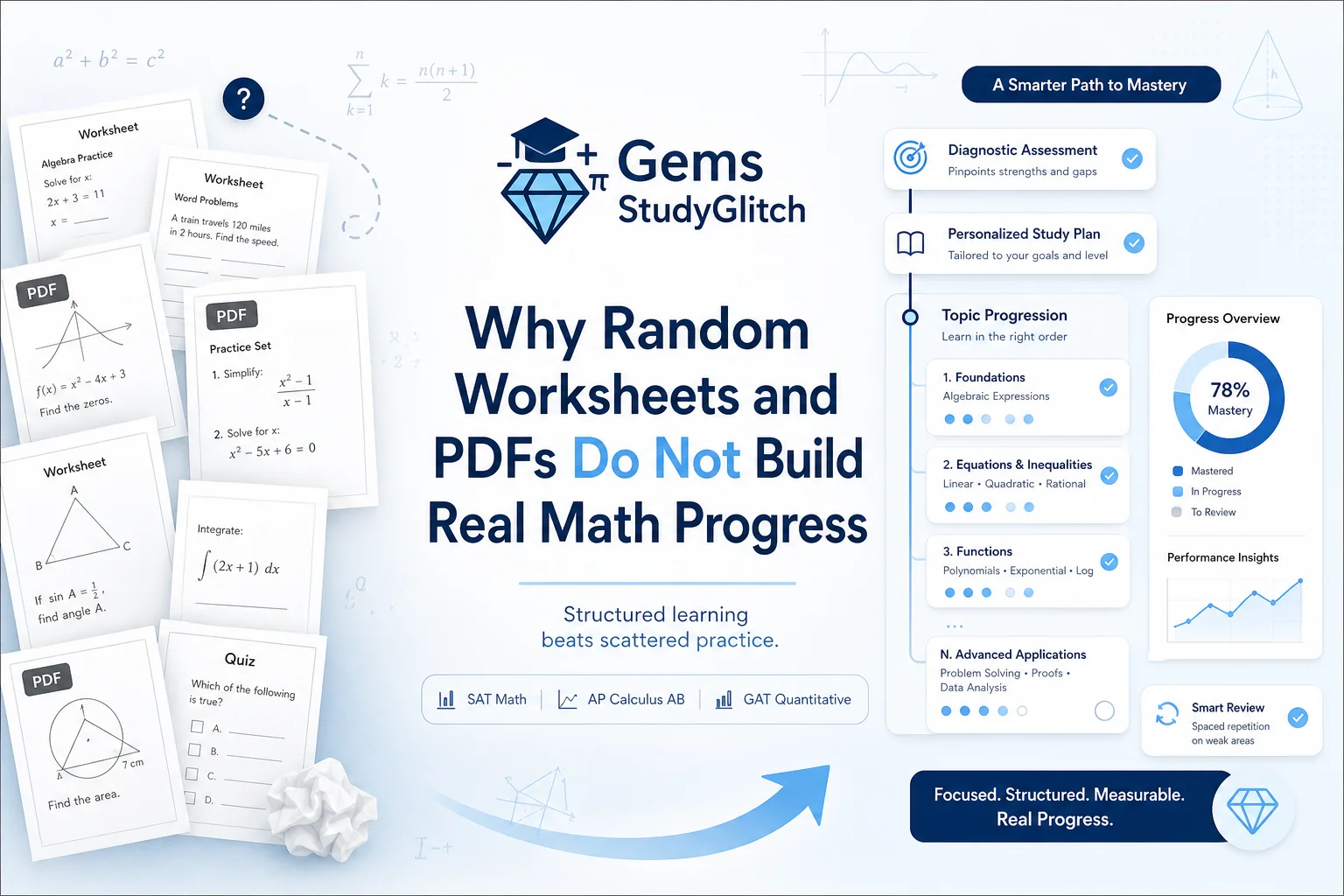
Random worksheets, PDFs, and question sets can help with practice, but they often fail when they are not connected to diagnosis, topic order, performance tracking, and a clear study sequence for SAT Math, AP Calculus AB, or GAT Quantitative preparation.
A useful math progress report should show more than scores. It should explain topic weaknesses, repeated patterns, timing behavior, consistency, score movement, and the next step for SAT Math, AP Calculus AB, or GAT Quantitative preparation.

Parents choosing SAT, AP, or GAT math support should ask one question: what evidence will show that it is working? Use this parent-focused framework to compare exam fit, progress signals, intervention, and when more tutoring is actually necessary.
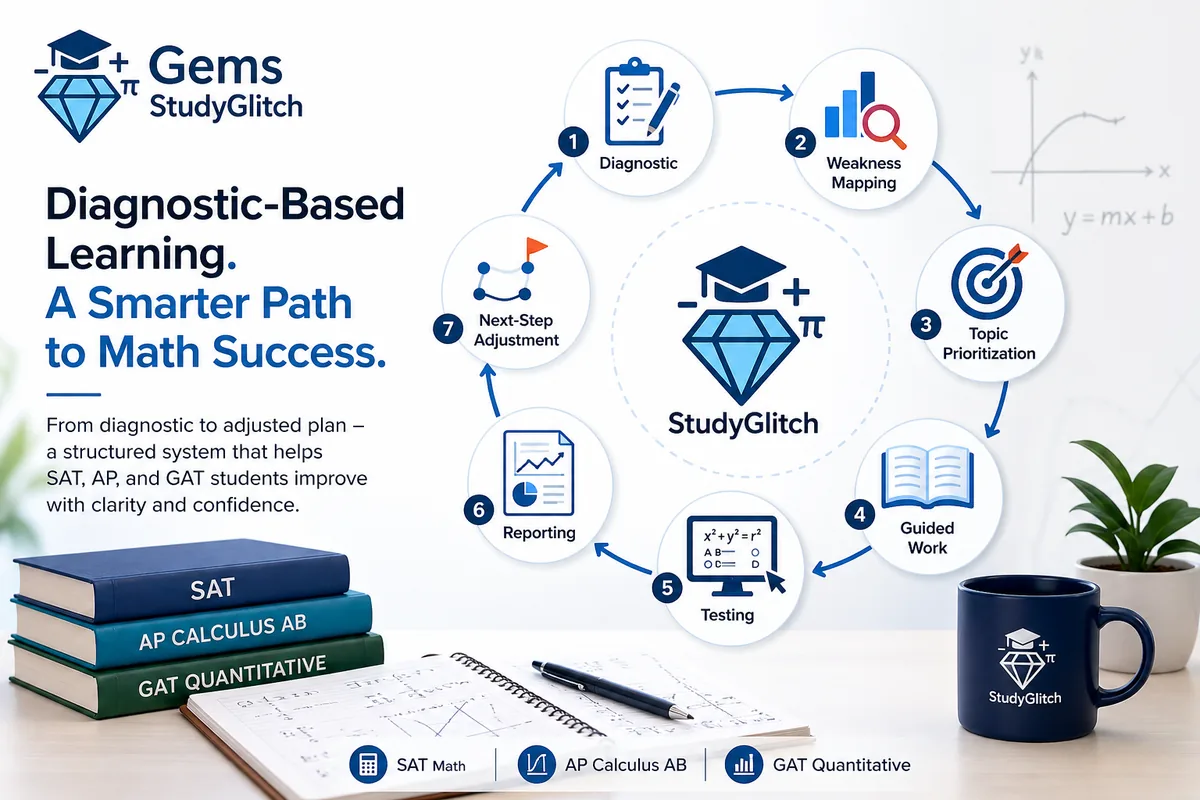
StudyGlitch uses diagnostic-based learning to turn math prep into a clearer path: diagnose performance, map weaknesses, prioritize topics, guide practice, retest progress, report results, and adjust the next step.
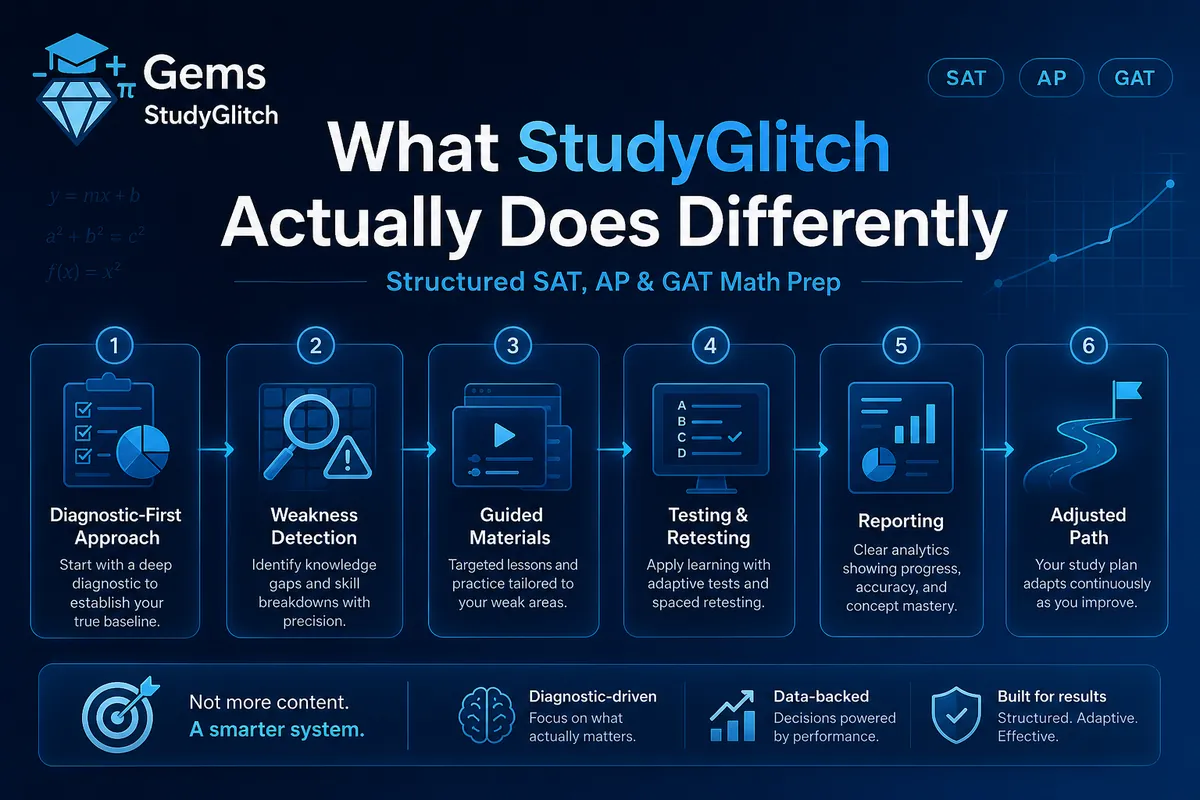
StudyGlitch is not built around random practice or generic tutoring plans. It uses diagnostics, weakness detection, guided materials, retesting, and reporting to give SAT, AP, and GAT math students a clearer and more structured path forward.
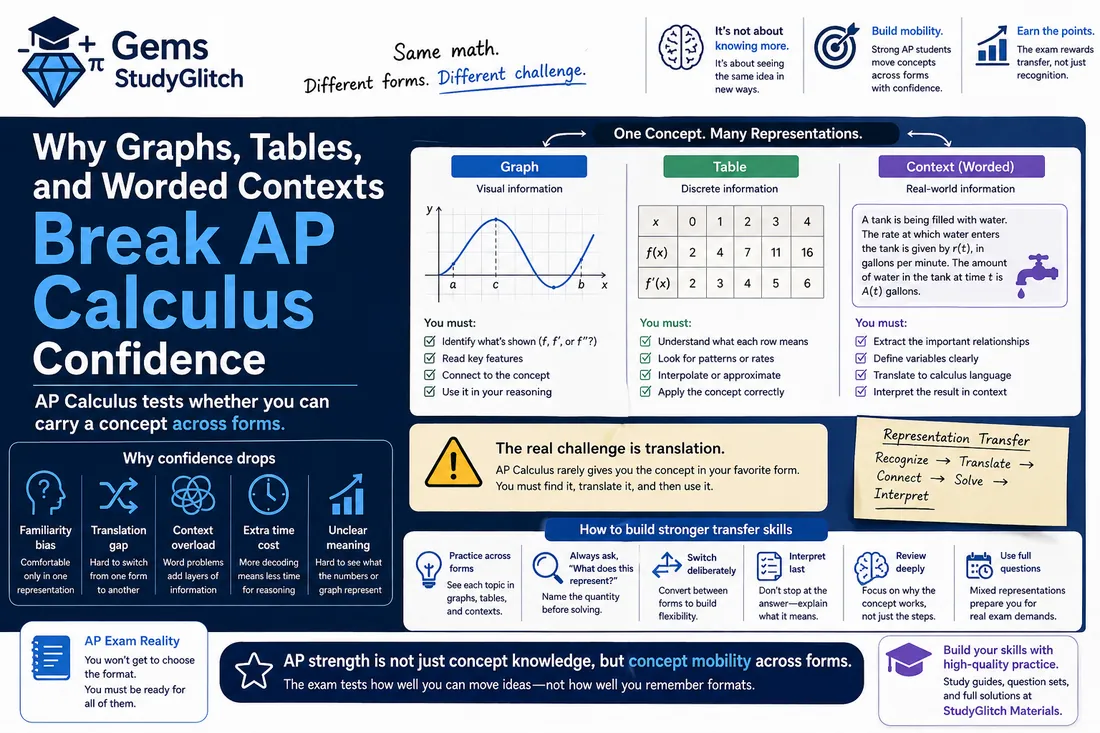
Many AP Calculus AB students understand a concept in algebraic form but lose confidence when the same idea appears through a graph, table, or worded context. The real challenge is representation transfer: carrying calculus ideas across forms.