

Why One Weekly Math Question Can Change How You Solve
One weekly math question can help students notice traps, compare methods, and discuss better solution paths inside the StudyGlitch Hub.
Ideas, systems, and thinking behind a smarter future of learning.

One weekly math question can help students notice traps, compare methods, and discuss better solution paths inside the StudyGlitch Hub.
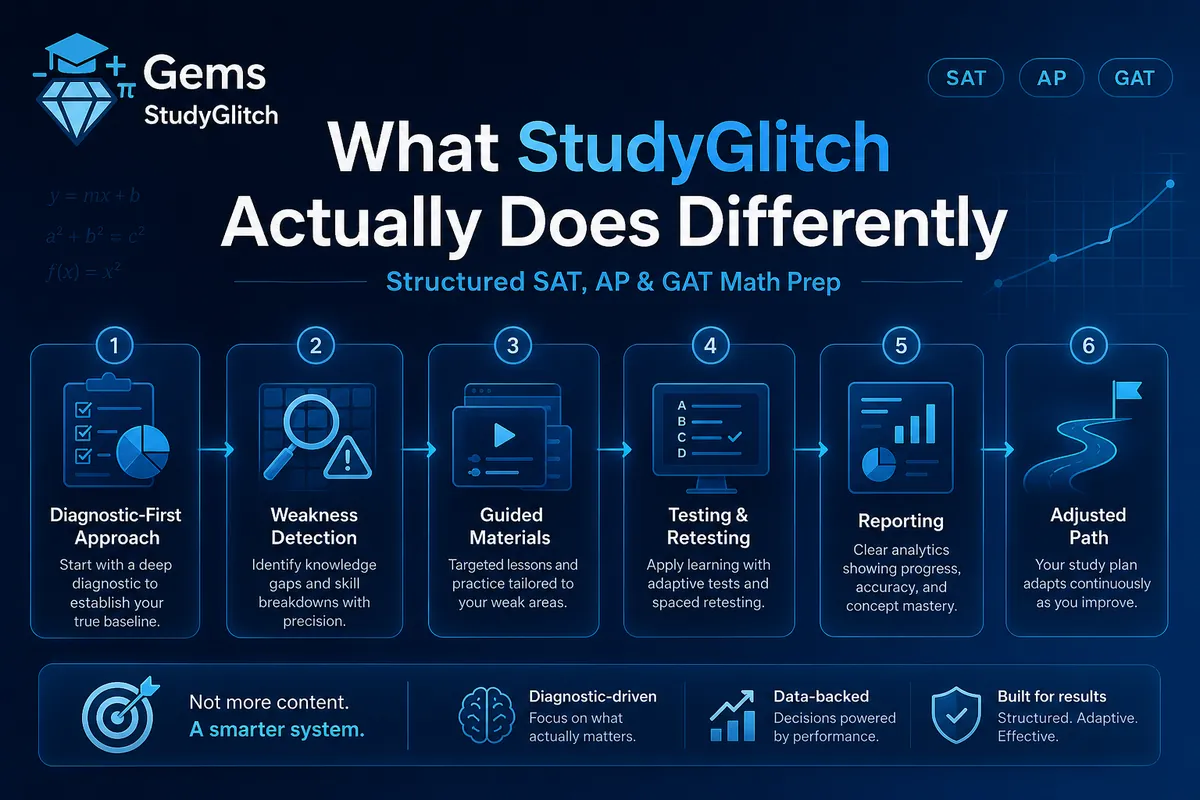
StudyGlitch is not built around random practice or generic tutoring plans. It uses diagnostics, weakness detection, guided materials, retesting, and reporting to give SAT, AP, and GAT math students a clearer and more structured path forward.
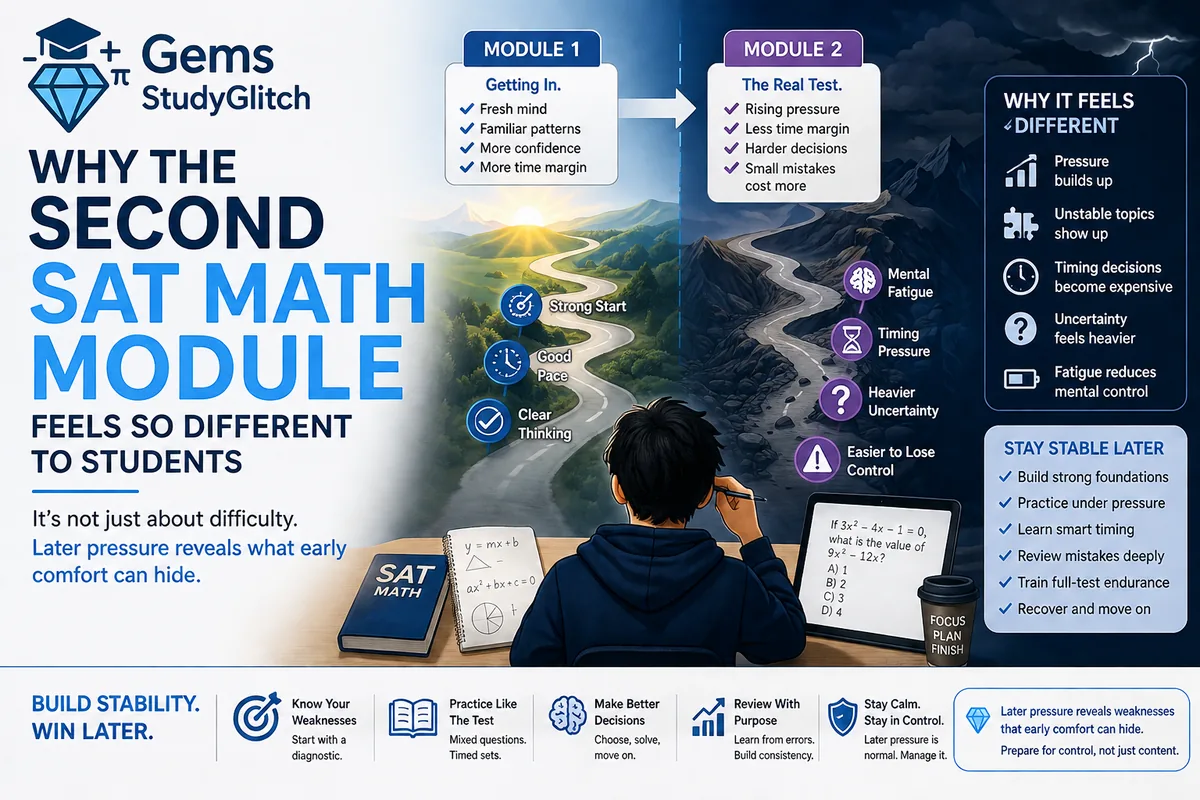
The second SAT Math module can feel different because later pressure exposes unstable mastery, weaker timing decisions, fatigue, and confidence gaps that may not appear earlier in the exam.

Desmos can be a strong tool on Digital SAT Math, but only when used with judgment. This article explains when Desmos creates clarity, when it wastes time, and how smart students decide whether to solve directly, estimate, verify, or graph.

Many SAT students do practice consistently and still stay stuck in the same score range. That usually does not mean they have reached their limit. It usually means their practice system has stopped producing the kind of feedback that creates real change.
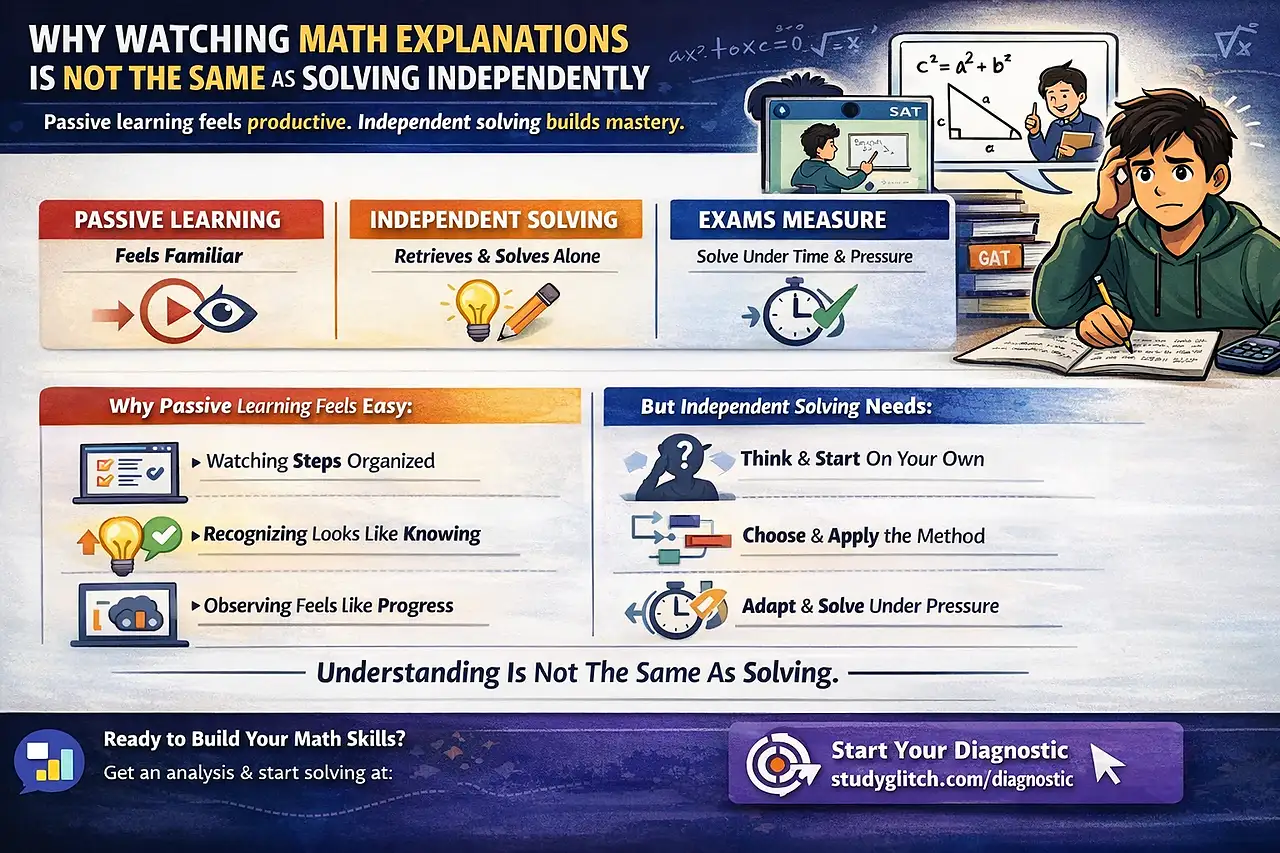
Watching math explanations can feel productive, but exams measure independent problem solving, not passive understanding. This article explains why watching math videos is not enough, how passive learning slows real improvement, & what students need to build independent mastery in SAT, AP, and GAT.
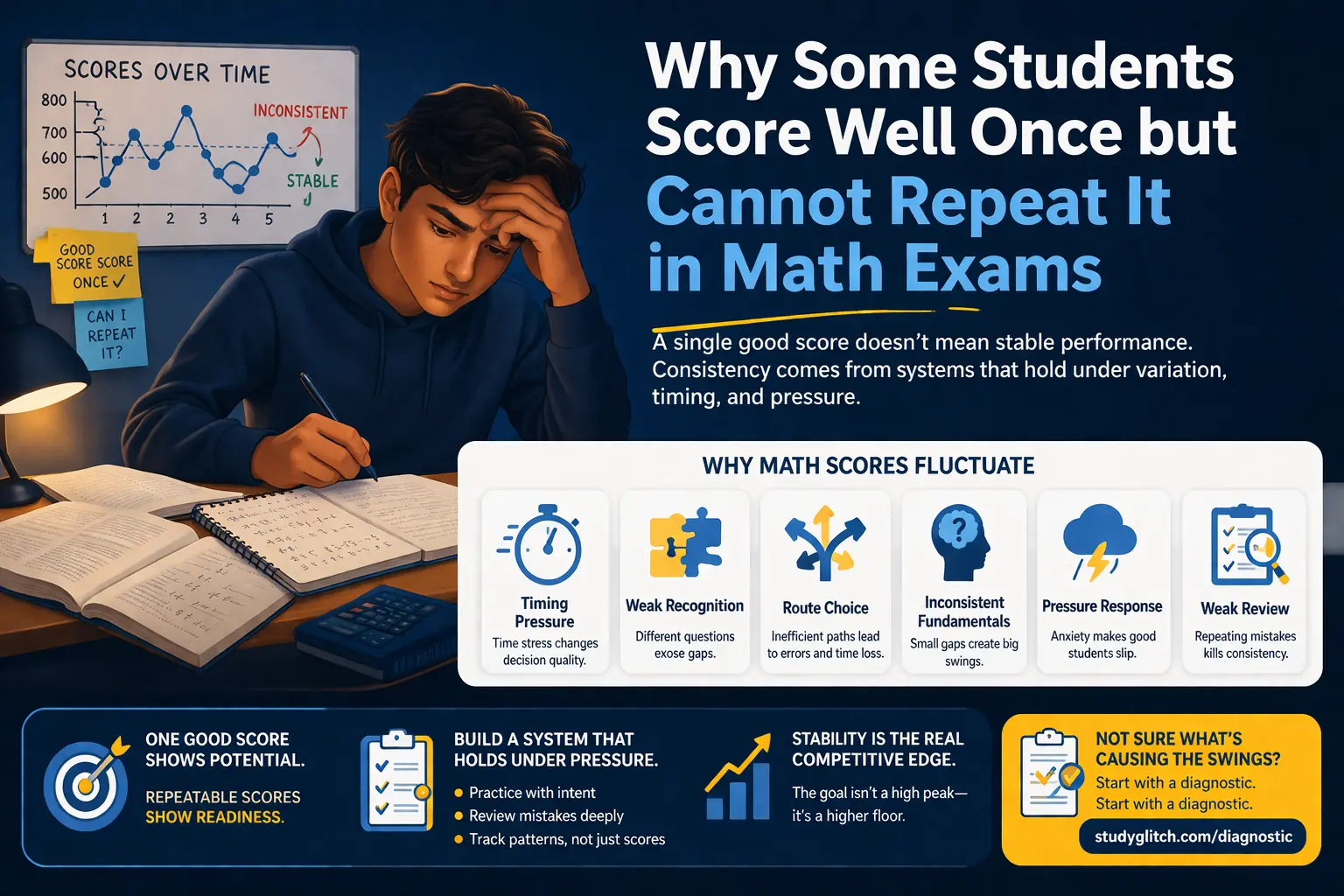
A single good math score does not always mean stable performance. This article explains why math exam scores fluctuate, what causes inconsistent SAT, AP, and GAT results, and why students need preparation systems that stay reliable under timing, variation, and pressure.
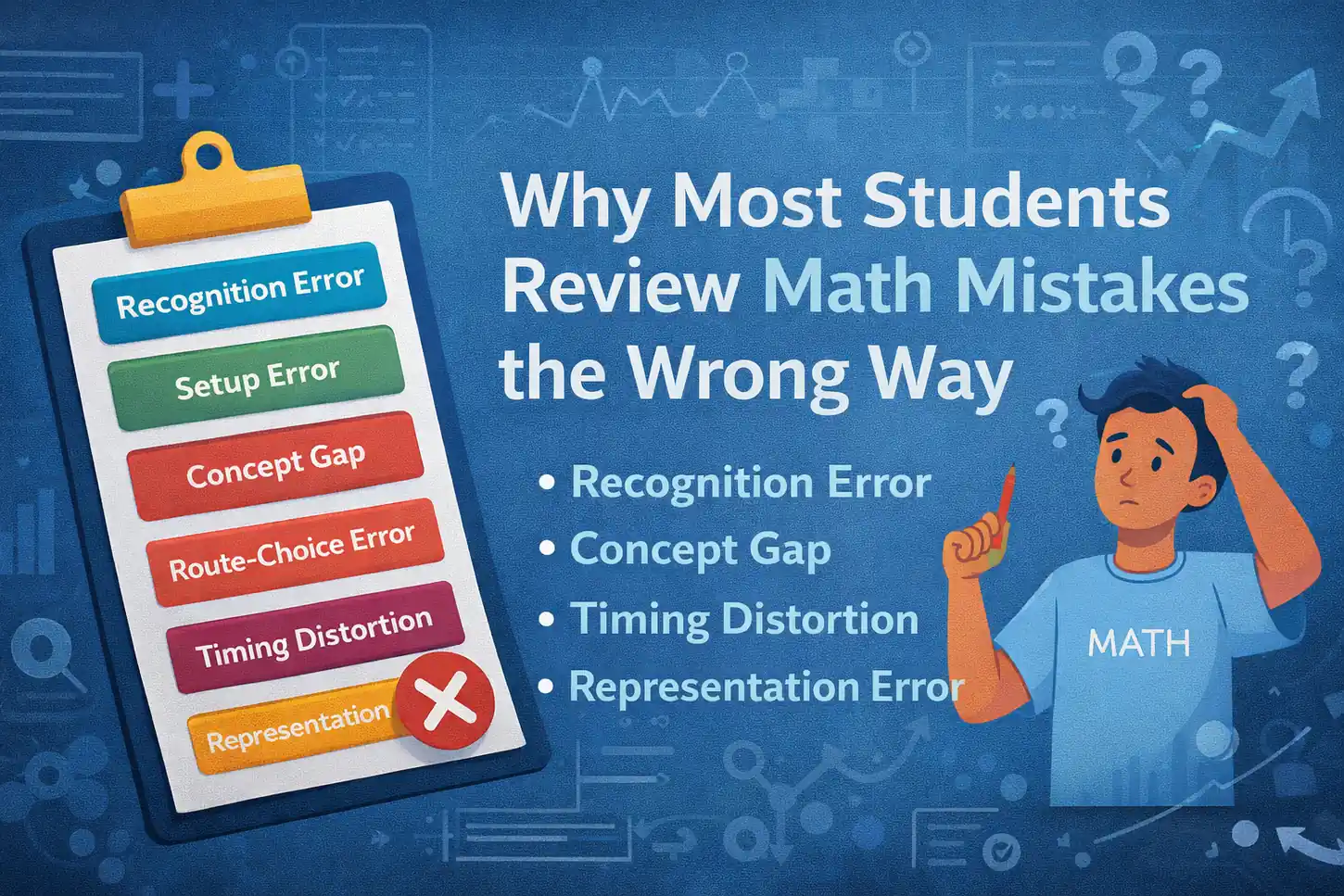
Students often review math mistakes too loosely, which is why the same errors keep repeating. This article explains how to review math mistakes properly through structured error analysis, helping students identify the real cause behind weak performance in SAT, AP, and GAT math.

SAT, AP, & GAT math may overlap in content, but they do not reward the same study habits. This article explains why each needs a different prep system, how students underperform when they use the wrong one, & how to choose the right math preparation pathway based on target exam and current weakness.
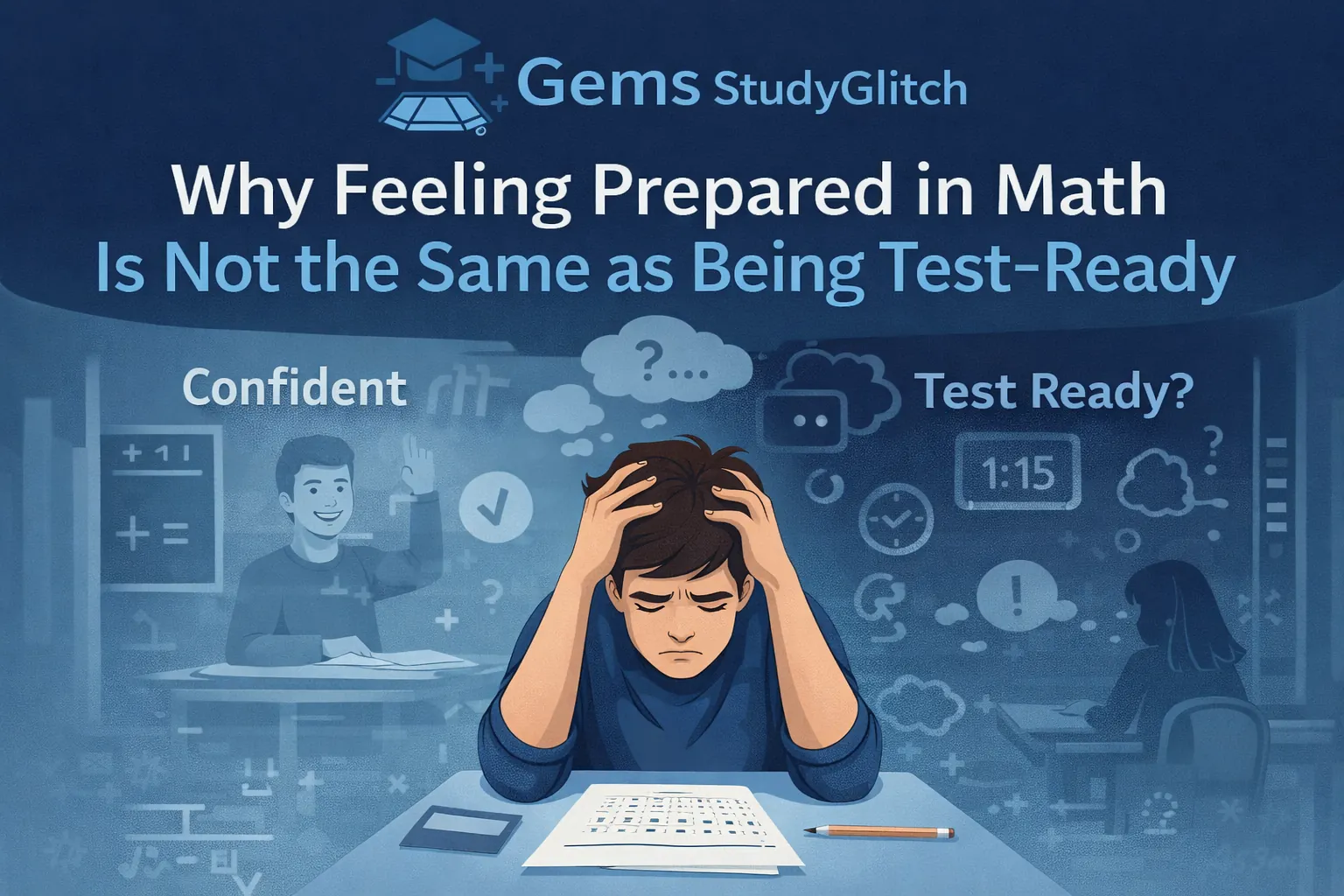
Feeling prepared in math does not always mean being test-ready. This article explains why students can feel confident in SAT Math, AP Calculus AB, or GAT Quantitative prep yet still underperform on test day.
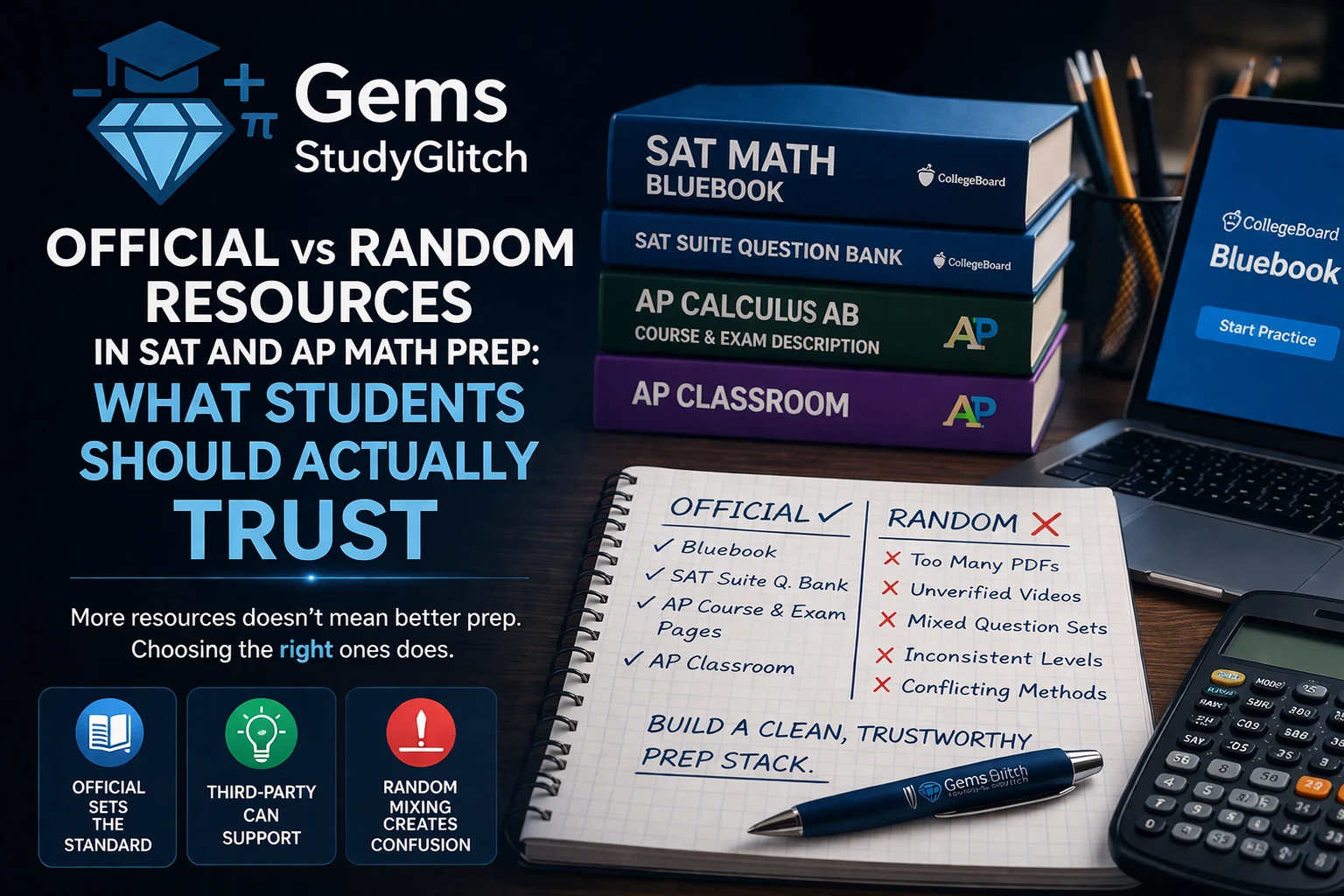
SAT Math or AP Calculus AB get buried under books, PDFs, videos, worksheets, and random question without knowing what actually deserves their trust. This article explains why official resources should anchor preparation, when third-party materials can help, and how to build a cleaner prep stack.
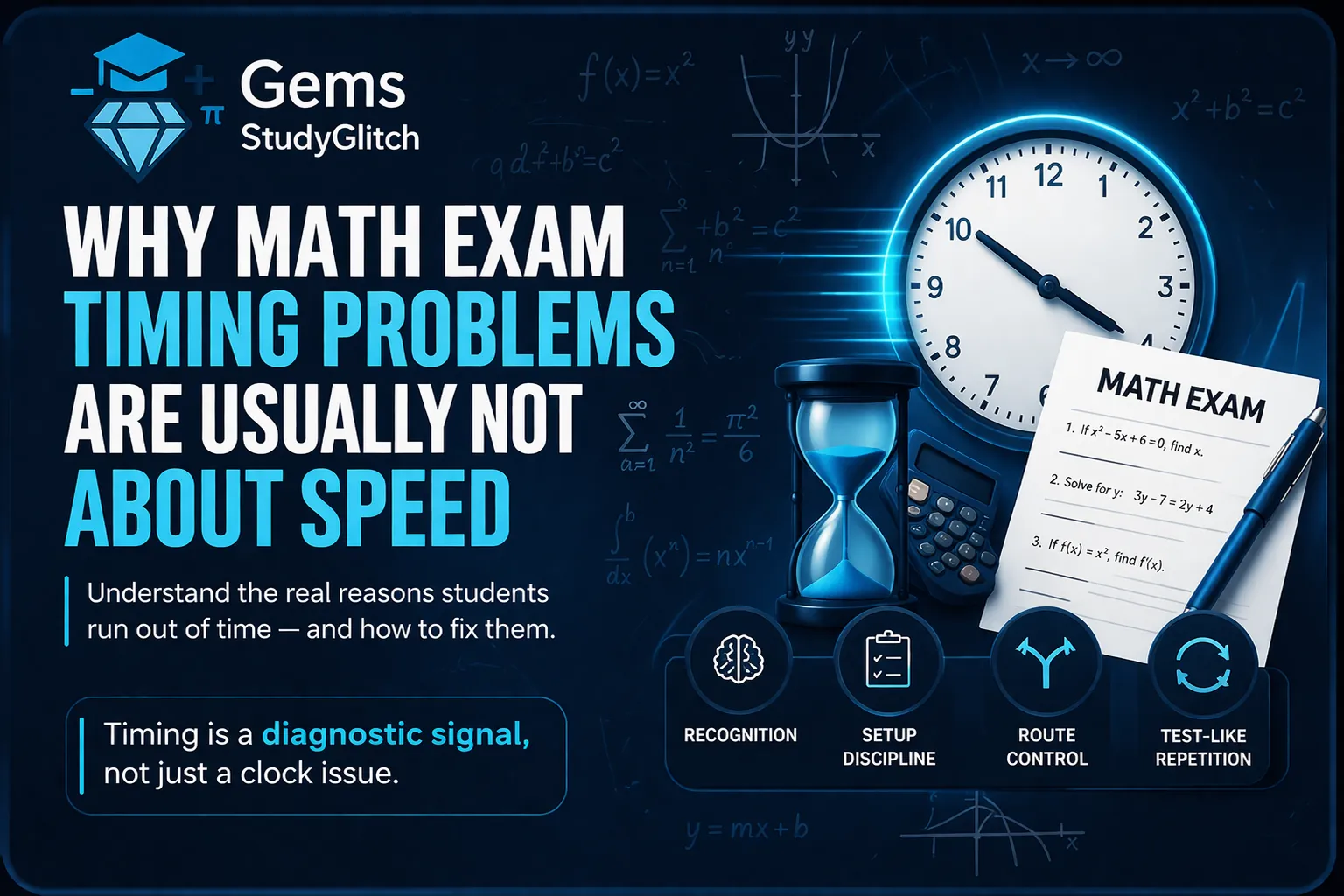
students assume running out of time in math exams means they are simply too slow. In reality, timing problems usually come from hesitation, weak recognition, & poor setup.This article explains why timing should be treated as a diagnostic signal across SAT Math, GAT Quantitative, and AP Calculus AB.

Students lose valuable SAT Math progress when they depend on DSAT leaks, prediction culture, and polished Desmos TikTok clips instead of real concept mastery. This article explains why leak-based prep creates false confidence, exam shock, and weak decision-making, and why a diagnostic-based SAT Math

Many students and parents search for SAT, AP, or GAT math tutoring without knowing what actually makes tutoring effective. Strong tutoring should begin with diagnosis, target real weaknesses, use a consistent method, and make progress visible over time.
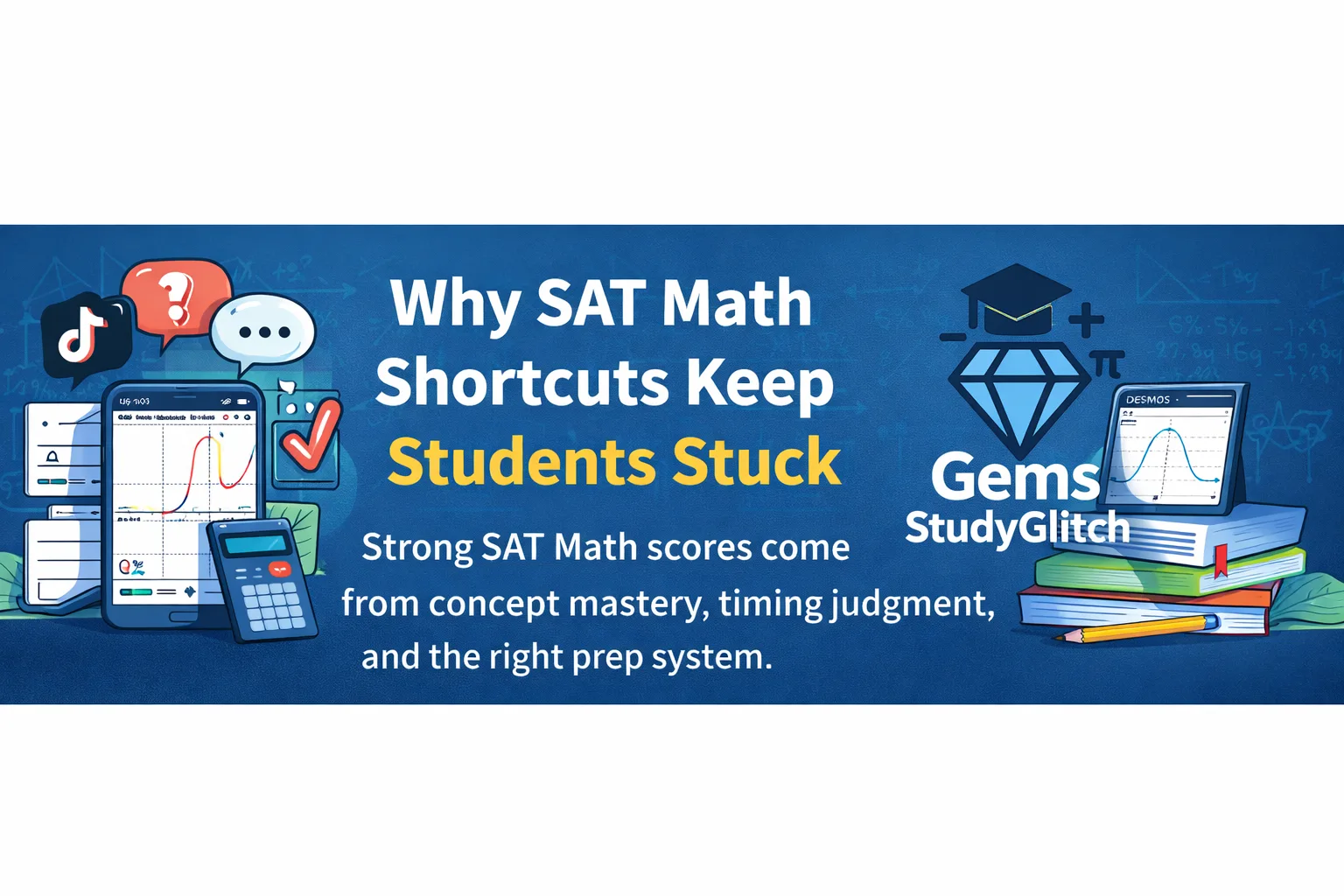
Students often believe Desmos tricks, SAT prediction videos, and shortcut-heavy prep will carry their score. In reality, strong SAT Math performance comes from a better system: concept mastery, timing judgment, correct Desmos use, and structured preparation that holds up when the question changes.

Digital SAT Math prep should not begin with random practice. It should begin with clarity. This article explains why many SAT Math study plans fail, how a free diagnostic can reveal real weaknesses, and what a smarter prep structure looks like for students in Saudi Arabia and across the Gulf.

SAT Math and GAT Qudurat Math may look similar, but they reward different skills. Students in Saudi Arabia who understand that difference can prepare more effectively and avoid wasting time on the wrong study approach.

Many SAT Math preparation plans fail not because students lack effort, but because the plan itself lacks structure. This article explains the most common mistakes students make and how a clearer, diagnostic-based approach can & will lead to stronger results.

Preparing for DSAT Math in Saudi Arabia requires more than solving hundreds of questions. Learn how diagnostic testing, structured practice, and consistency improve DSAT scores.
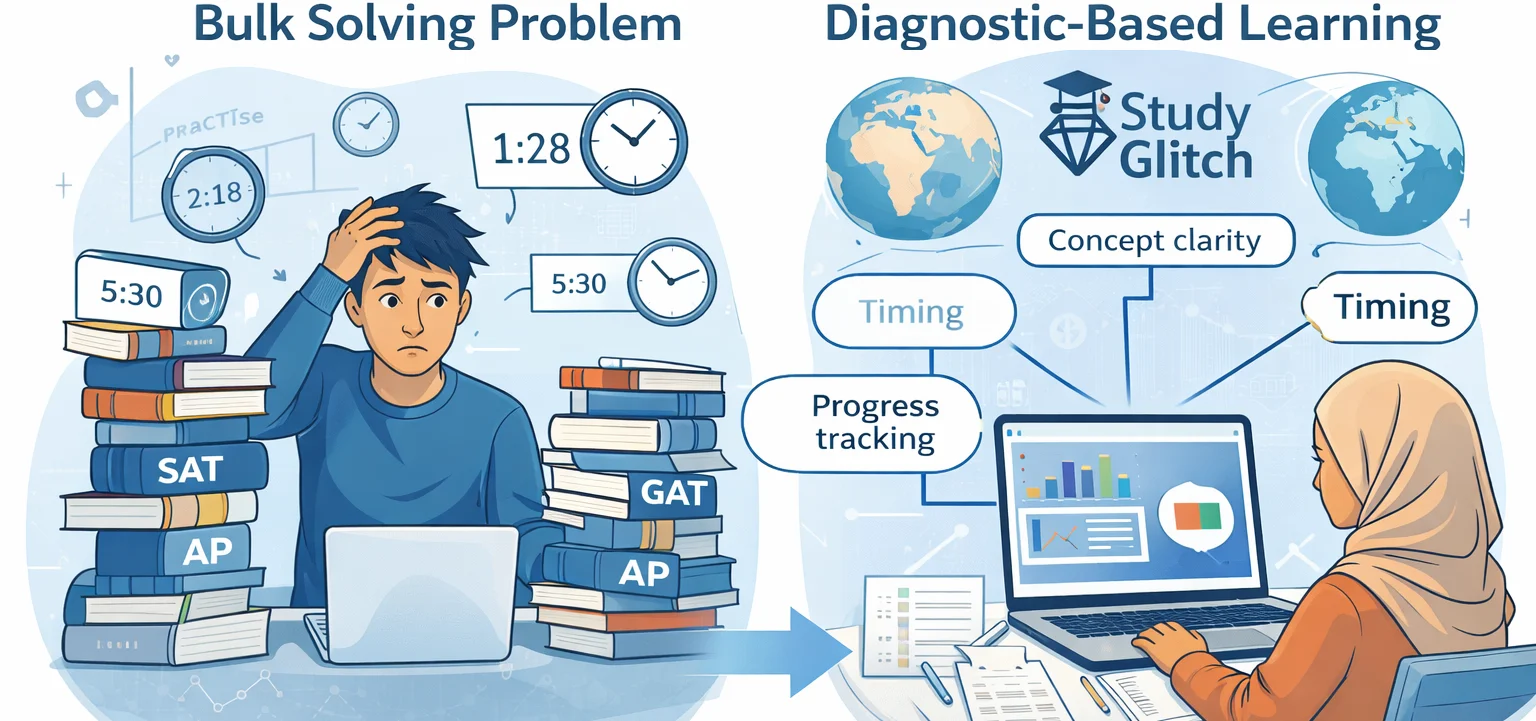
Structured SAT, GAT (Qudurat), and AP Math preparation in Saudi Arabia starts with diagnostic clarity—not bulk solving. Discover a smarter strategy.