

Group vs Individual Math Tutoring: Which Works Better for SAT, AP, and GAT?
Group and individual tutoring can both work, but they solve different problems. The right choice depends on the student’s level, confidence, weak areas, and exam timeline.
Ideas, systems, and thinking behind a smarter future of learning.

Group and individual tutoring can both work, but they solve different problems. The right choice depends on the student’s level, confidence, weak areas, and exam timeline.

The number of tutoring sessions a student needs depends on their starting level, exam deadline, weak topics, timing profile, and how consistently they can practice between sessions.

Use StudyGlitch free SAT Math, GAT / Qudurat, and AP Calculus AB practice pages to check how you think before studying, test your method during review, and catch traps after learning.

Math performance data should show more than raw scores. Schools, parents, and students need to understand repeated weak patterns, topic concentration, timing behavior, stability, repeatability, and exam-condition performance.
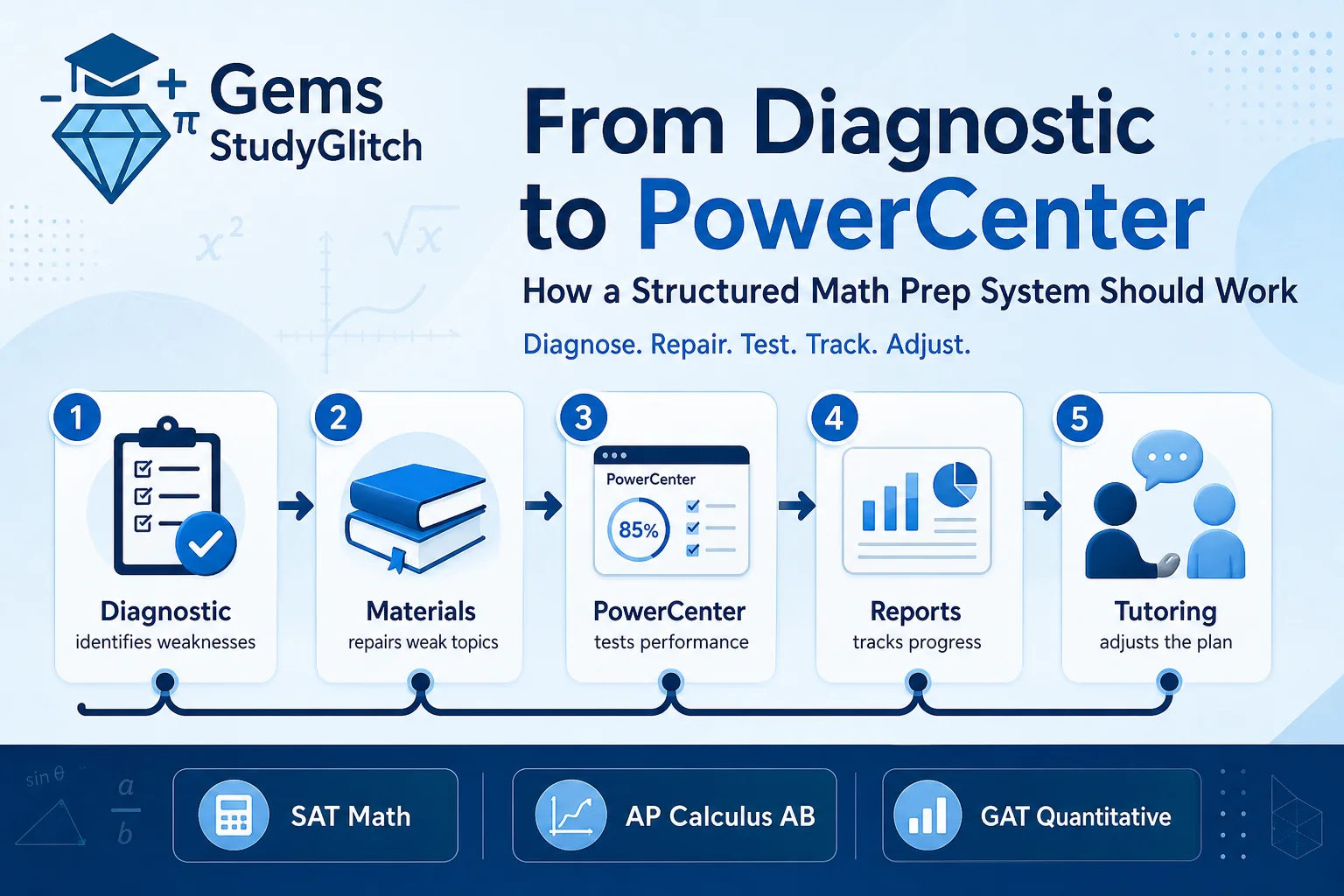
A strong math prep system should connect diagnostic testing, guided materials, practice tests, progress reports, and tutoring support so students know what to fix, how to practice, and when they are improving.
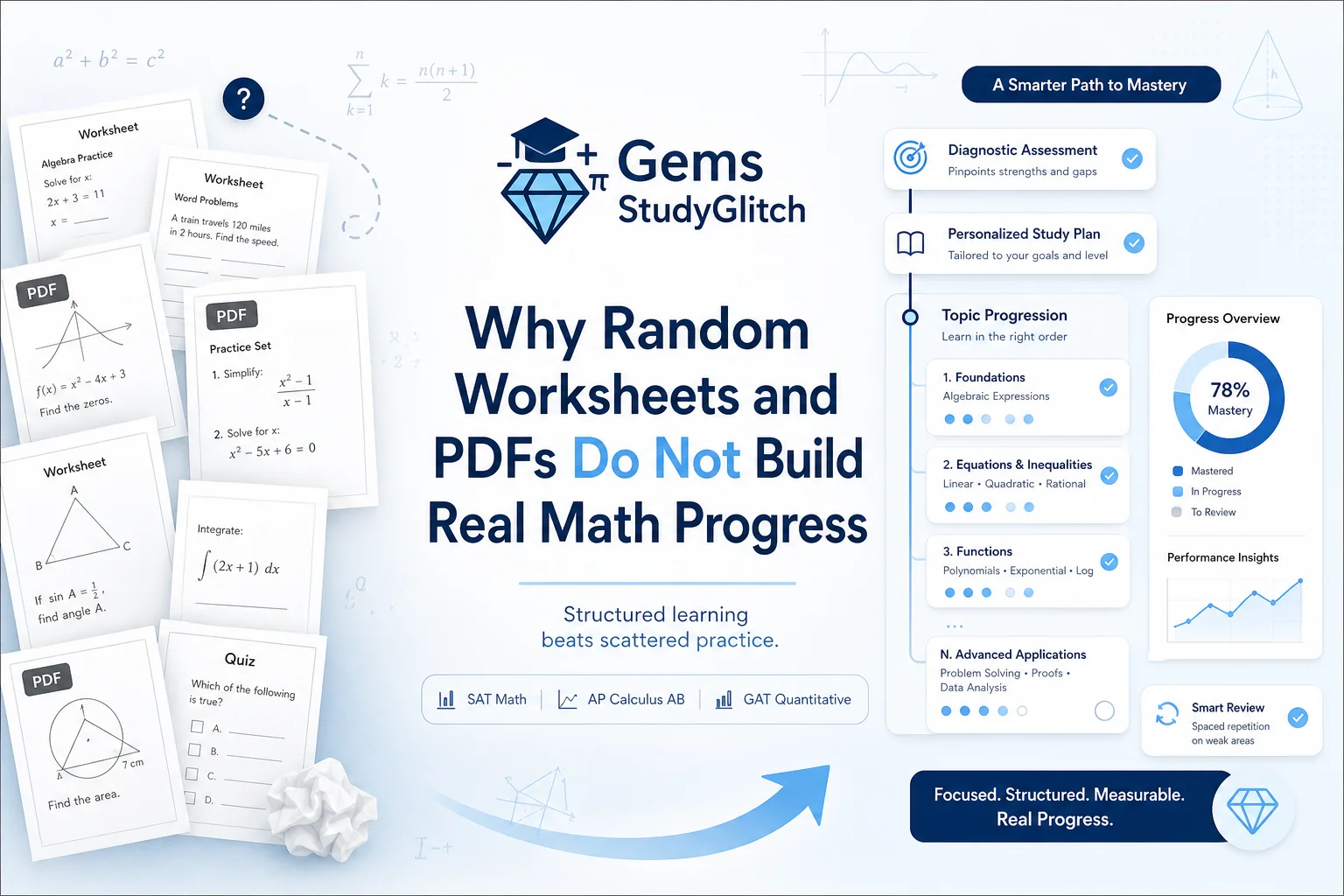
Random worksheets, PDFs, and question sets can help with practice, but they often fail when they are not connected to diagnosis, topic order, performance tracking, and a clear study sequence for SAT Math, AP Calculus AB, or GAT Quantitative preparation.
A useful math progress report should show more than scores. It should explain topic weaknesses, repeated patterns, timing behavior, consistency, score movement, and the next step for SAT Math, AP Calculus AB, or GAT Quantitative preparation.

Parents in Saudi Arabia choosing SAT, AP, or GAT math support should look beyond attendance and lesson hours. The right support should show structure, measurable progress, reporting, exam fit, and clear response to the student’s weaknesses.
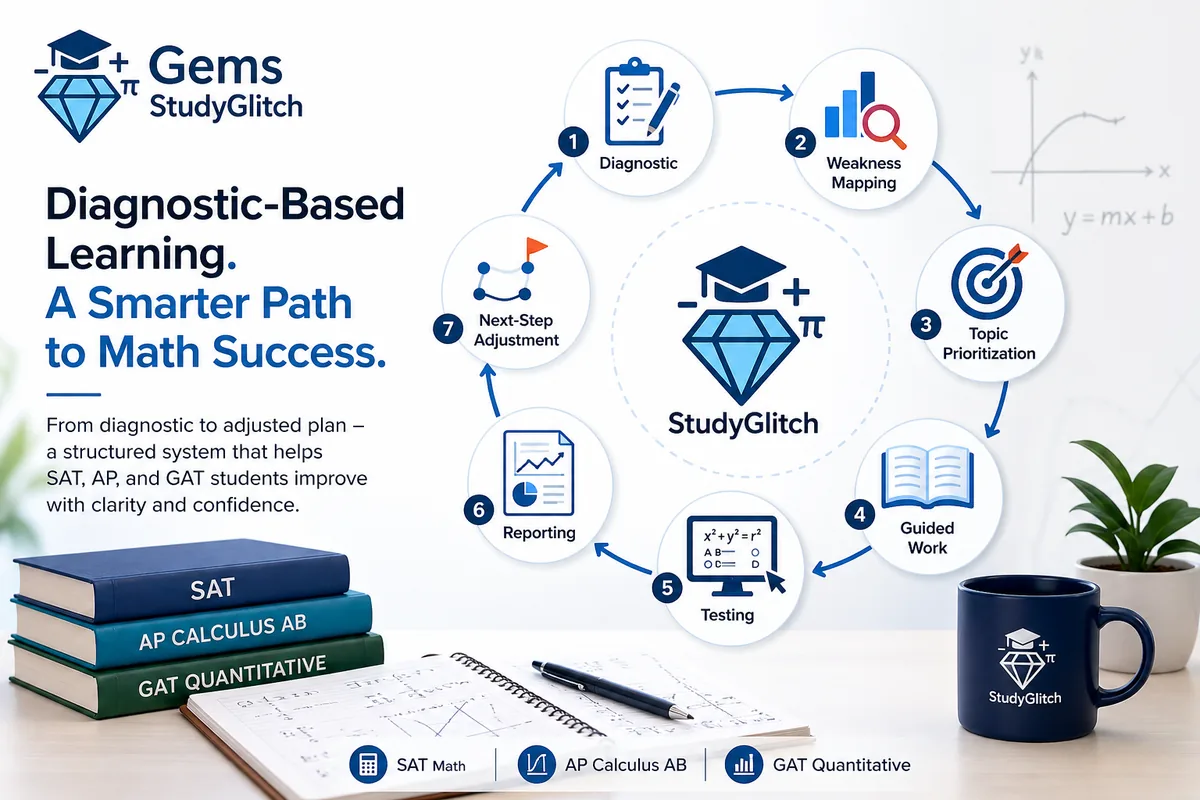
StudyGlitch uses diagnostic-based learning to turn math prep into a clearer path: diagnose performance, map weaknesses, prioritize topics, guide practice, retest progress, report results, and adjust the next step.
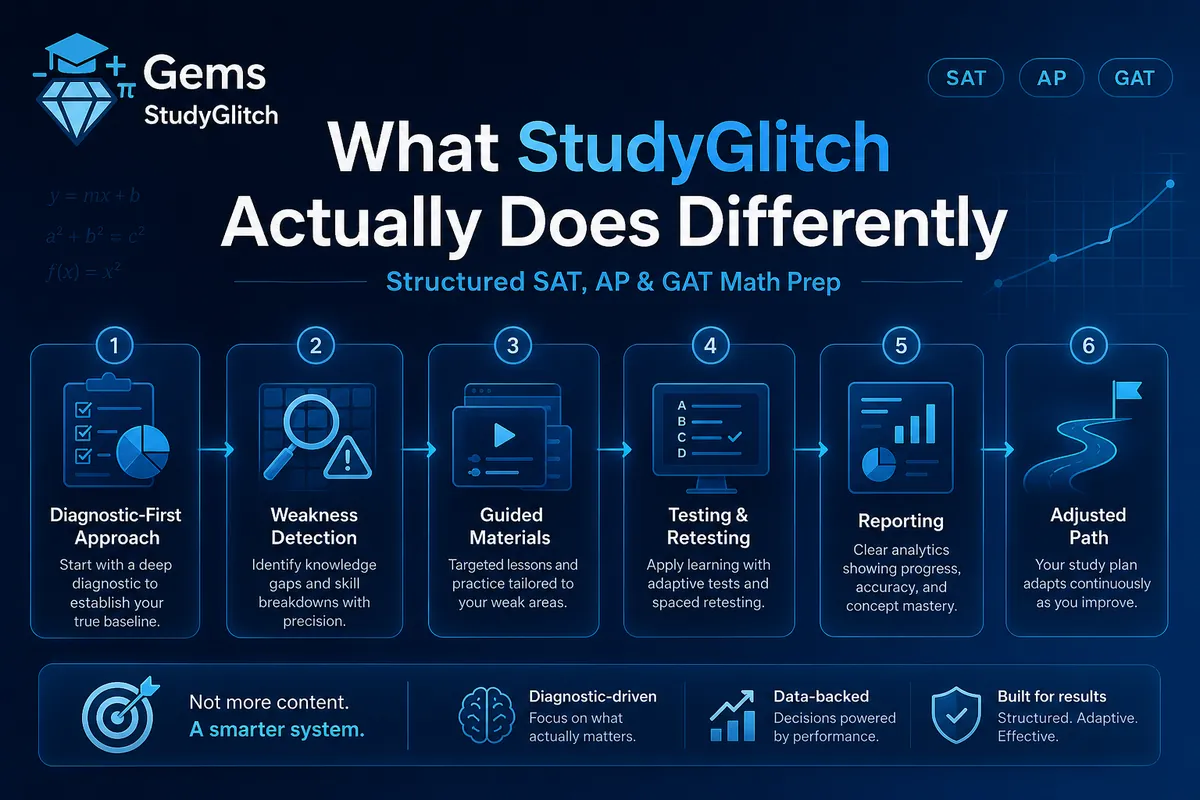
StudyGlitch is not built around random practice or generic tutoring plans. It uses diagnostics, weakness detection, guided materials, retesting, and reporting to give SAT, AP, and GAT math students a clearer and more structured path forward.
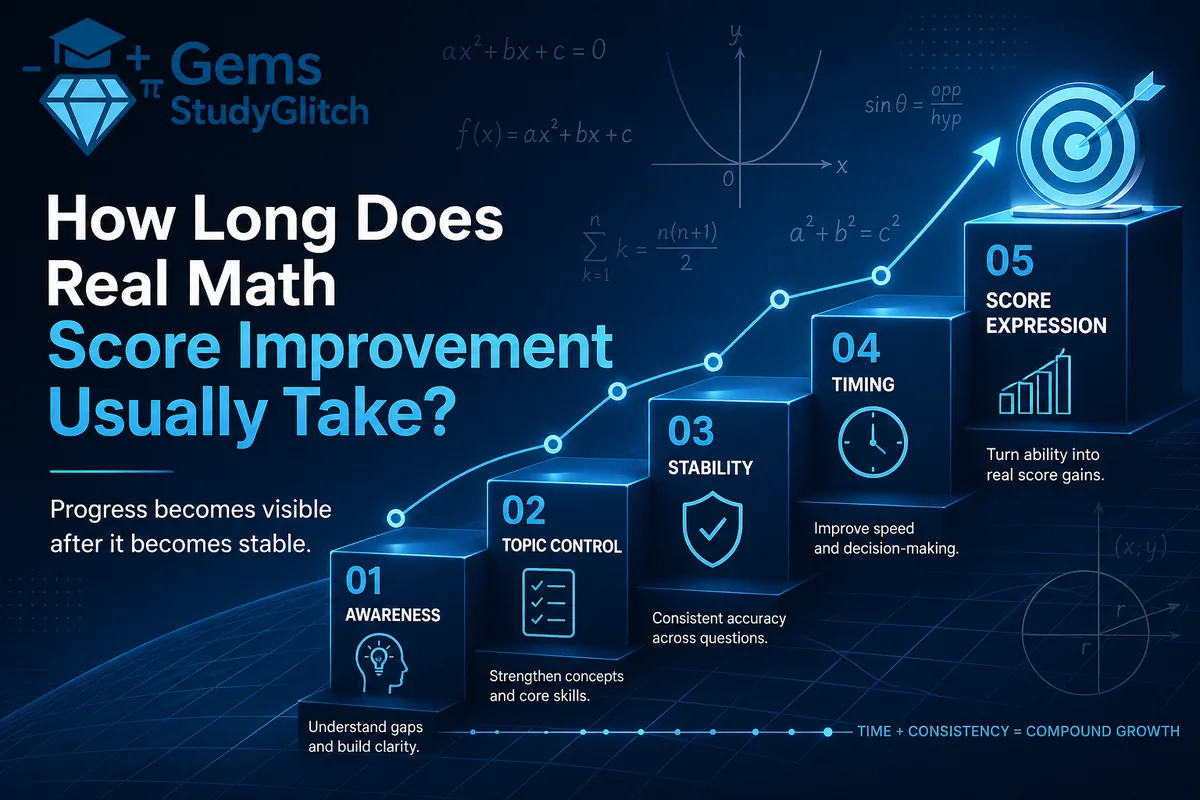
Real math score improvement is usually layered, not instant. Before the headline score moves, students often build awareness, topic control, timing stability, and repeatable performance. Here is how SAT, AP, and GAT math progress usually develops.
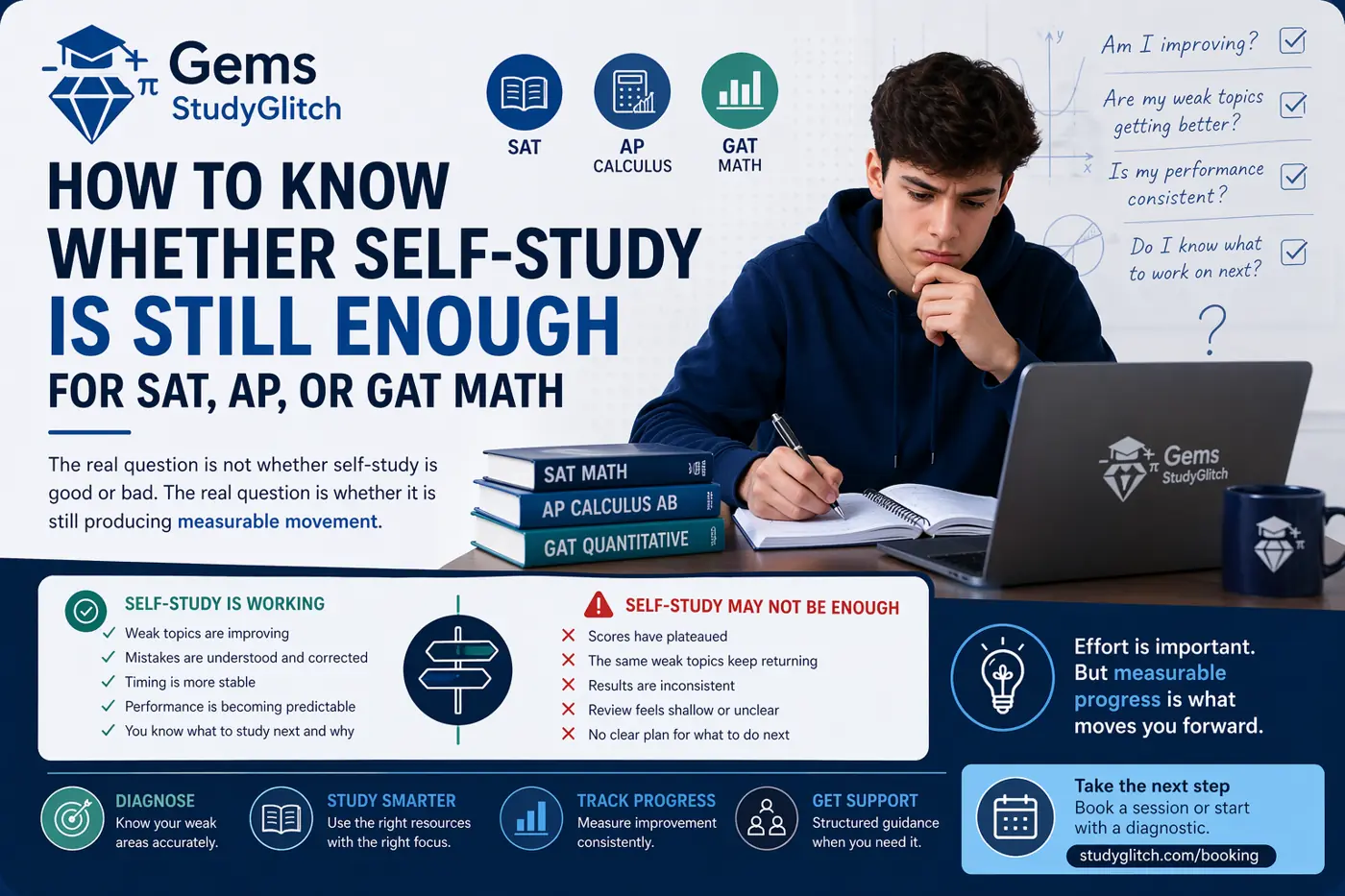
Self-study can be effective for SAT, AP, and GAT math, but only if it continues to produce measurable progress. This article explains how students and parents can recognize when self-study is still working and when structured support may be needed.
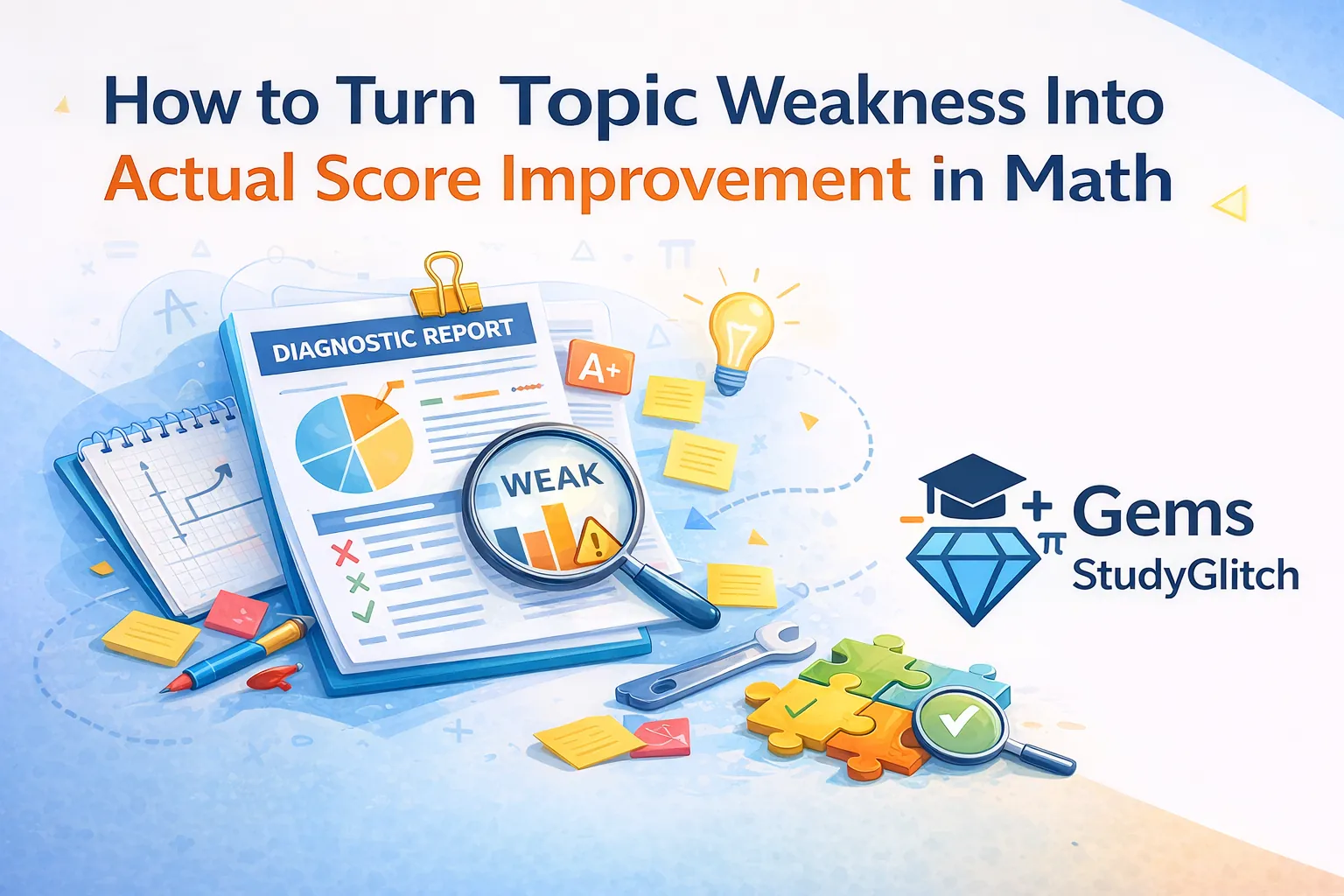
Many students know which math topics are weak but still see no real score improvement. The reason is simple. Naming the weak topic is only the beginning. Score movement happens when that weakness is broken into the right layer, repaired in the right sequence, and tested under real exam conditions.
The days after a math diagnostic test matter more than most students realize. A diagnostic is not useful because it gives a score. It becomes useful when it changes what the student studies first, what gets delayed, and what kind of support is actually needed.
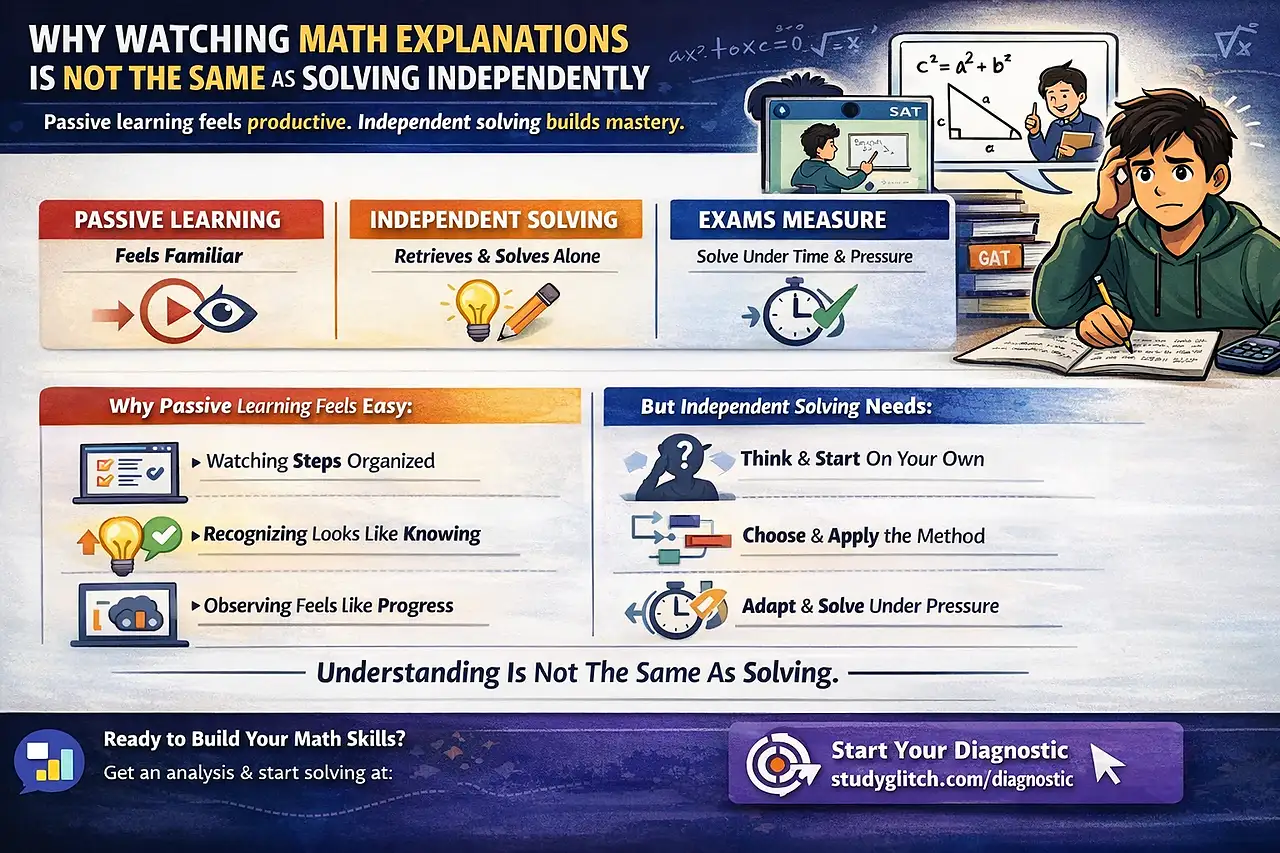
Watching math explanations can feel productive, but exams measure independent problem solving, not passive understanding. This article explains why watching math videos is not enough, how passive learning slows real improvement, & what students need to build independent mastery in SAT, AP, and GAT.
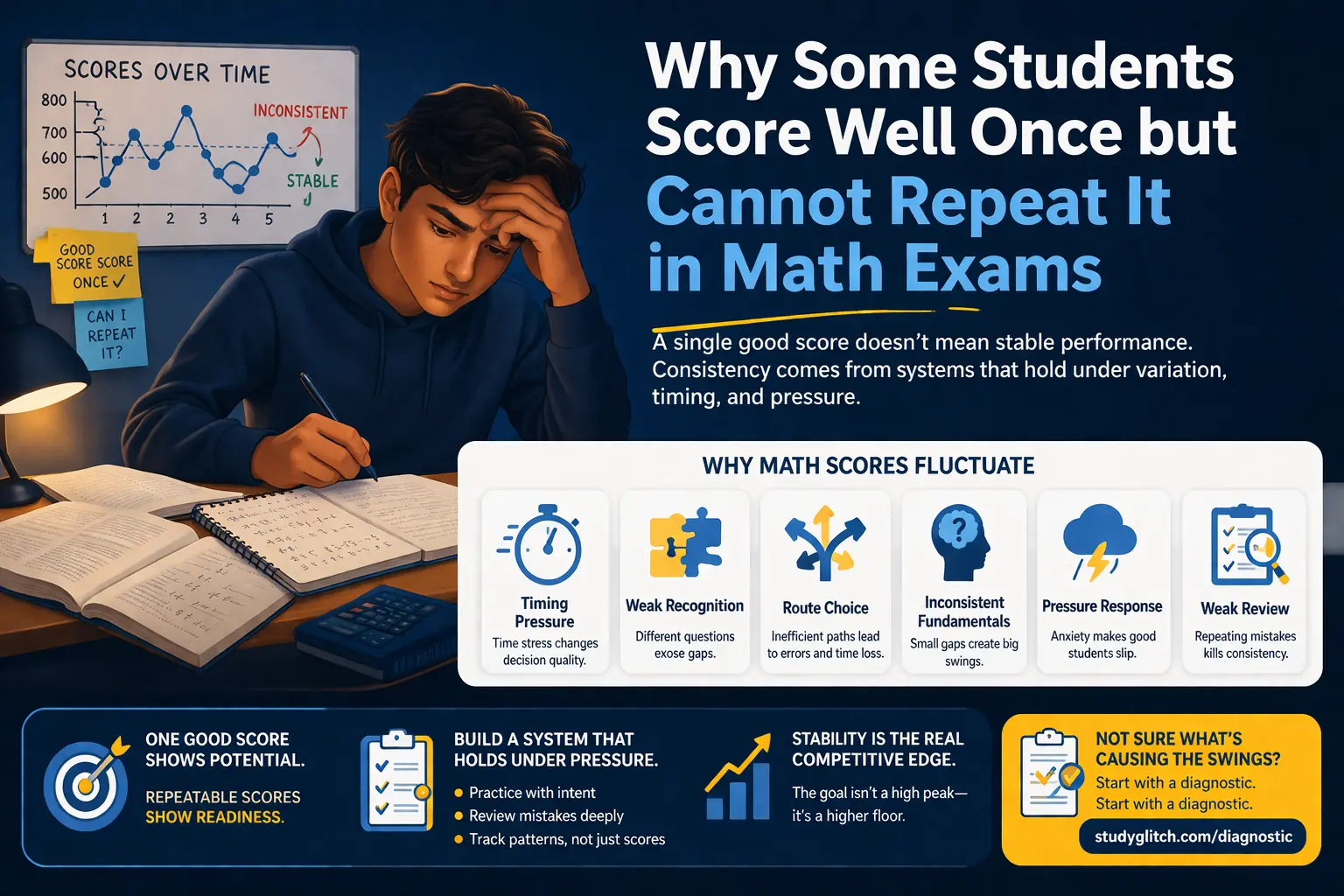
A single good math score does not always mean stable performance. This article explains why math exam scores fluctuate, what causes inconsistent SAT, AP, and GAT results, and why students need preparation systems that stay reliable under timing, variation, and pressure.
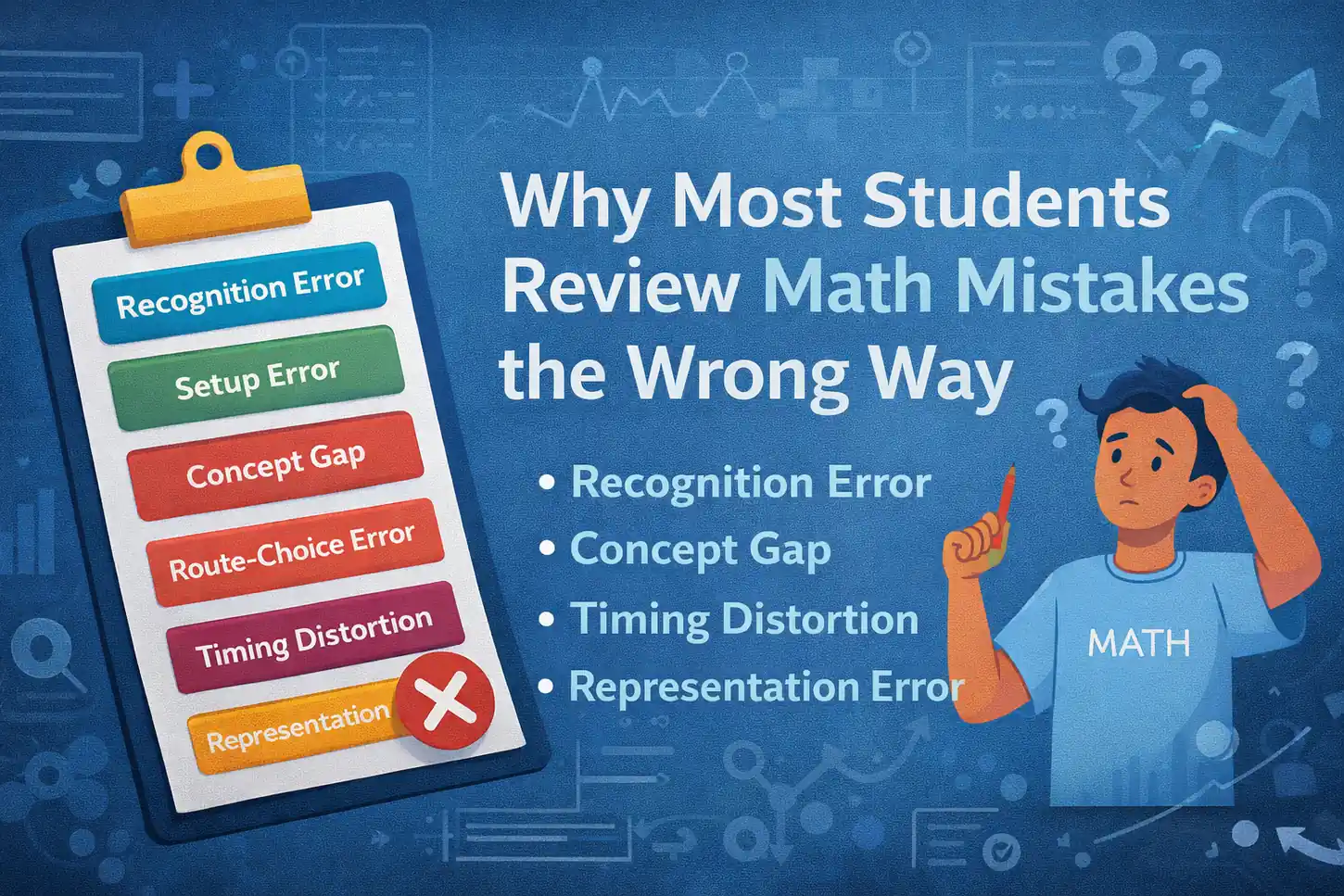
Students often review math mistakes too loosely, which is why the same errors keep repeating. This article explains how to review math mistakes properly through structured error analysis, helping students identify the real cause behind weak performance in SAT, AP, and GAT math.
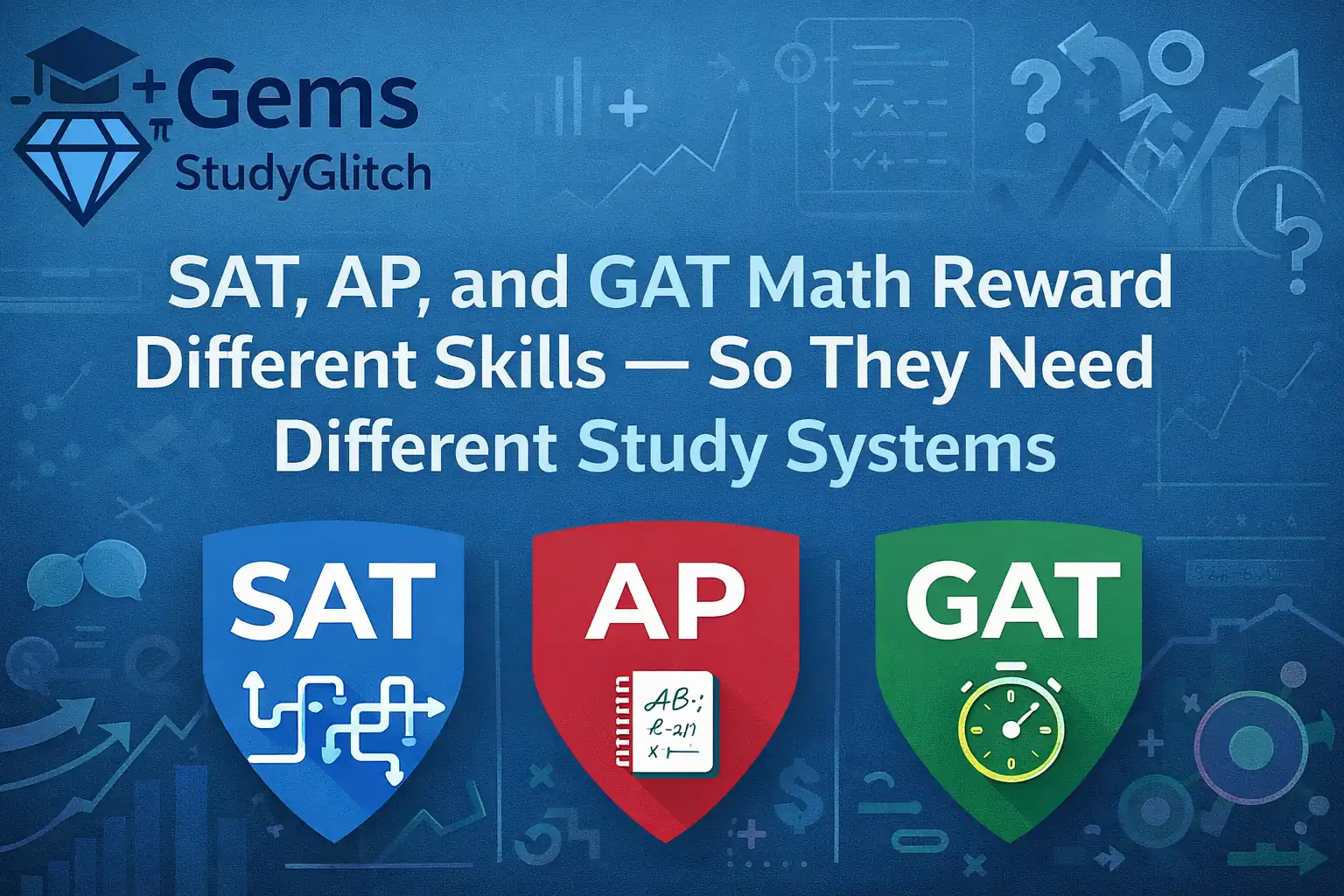
SAT, AP, & GAT math may overlap in content, but they do not reward the same study habits. This article explains why each needs a different prep system, how students underperform when they use the wrong one, & how to choose the right math preparation pathway based on target exam and current weakness.

A good math diagnostic should do more than give a score. This article explains how students should read diagnostic results through topic-level weakness, timing profile, error patterns, decision quality, score-band prediction, and question weighting.
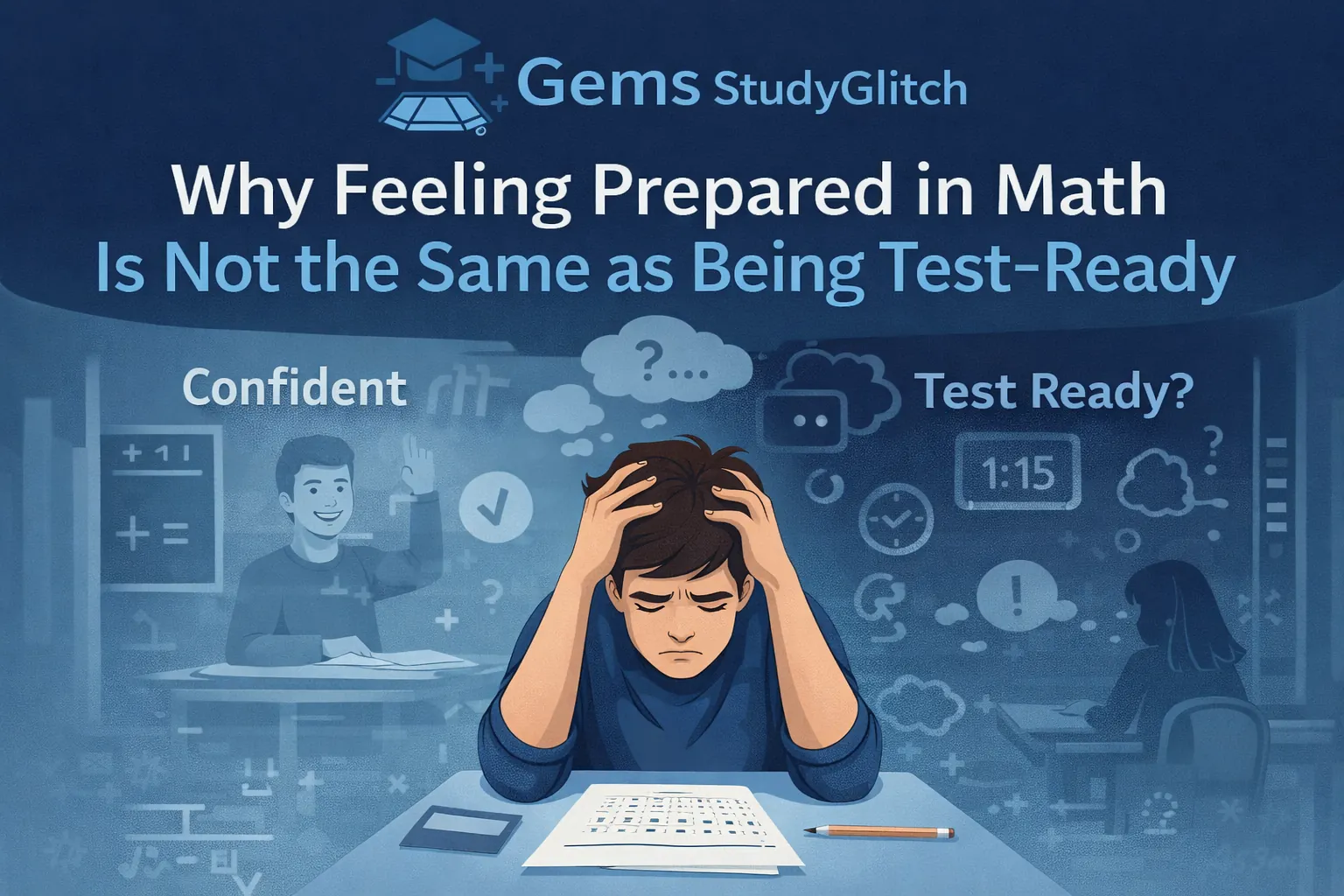
Feeling prepared in math does not always mean being test-ready. This article explains why students can feel confident in SAT Math, AP Calculus AB, or GAT Quantitative prep yet still underperform on test day.
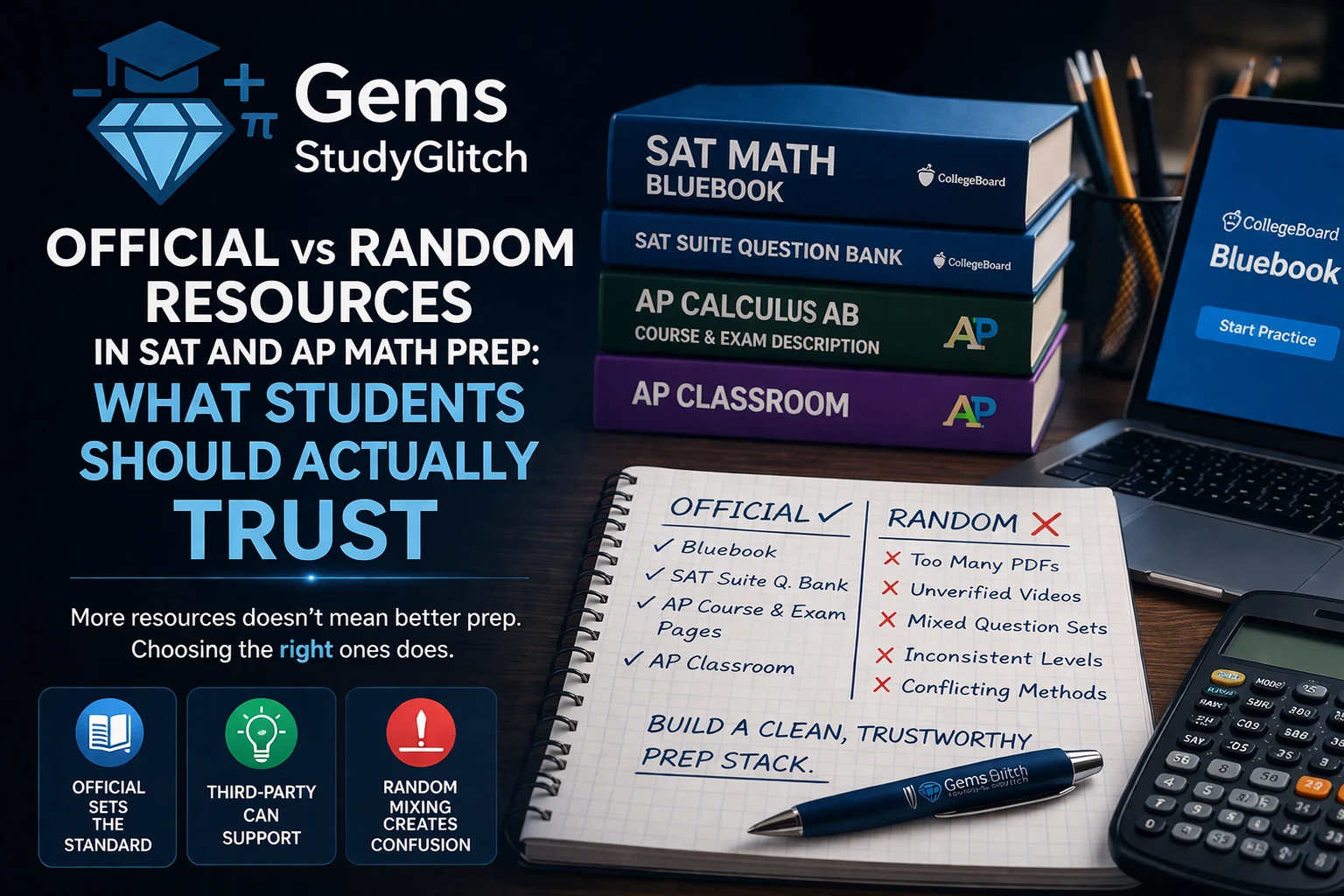
SAT Math or AP Calculus AB get buried under books, PDFs, videos, worksheets, and random question without knowing what actually deserves their trust. This article explains why official resources should anchor preparation, when third-party materials can help, and how to build a cleaner prep stack.
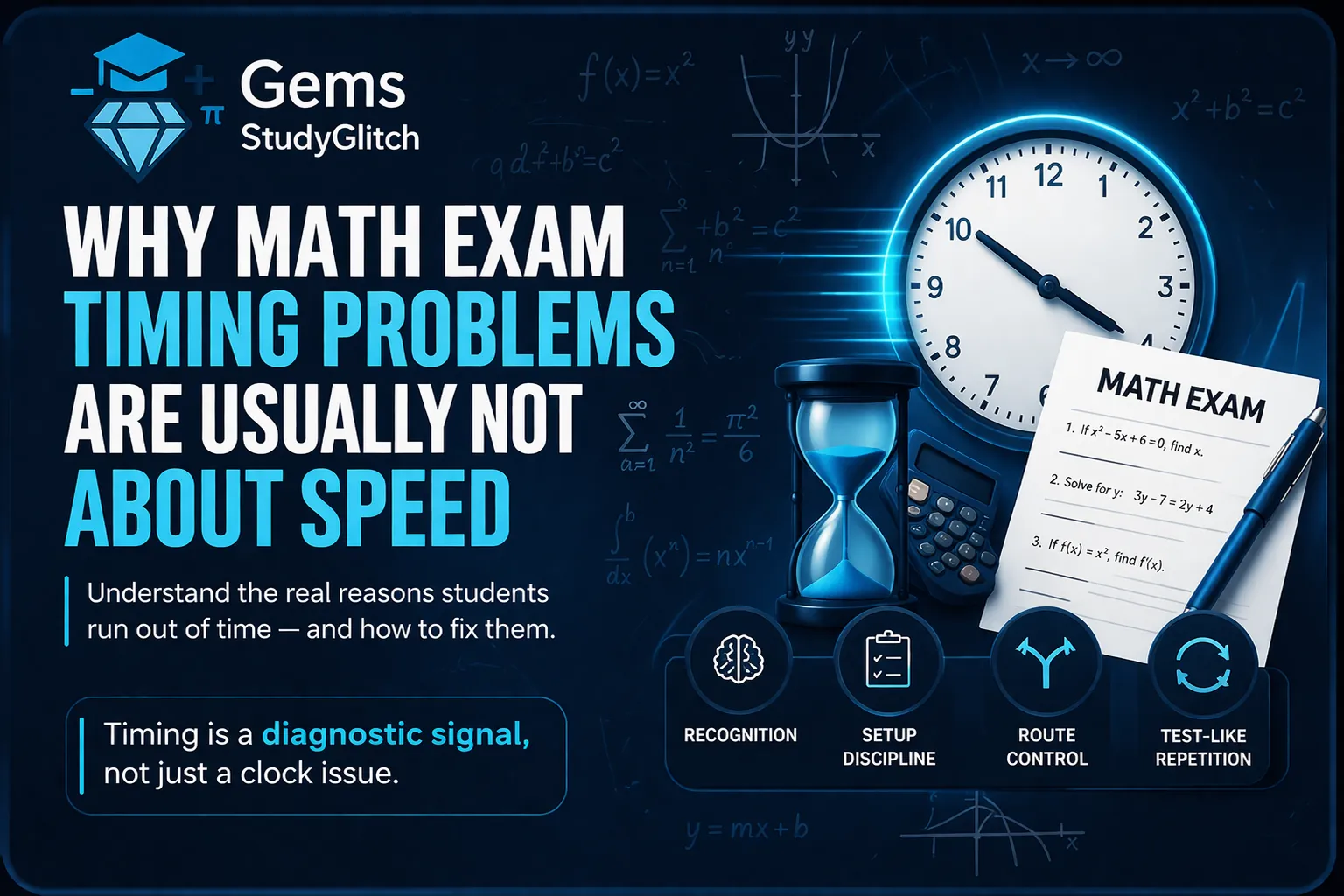
students assume running out of time in math exams means they are simply too slow. In reality, timing problems usually come from hesitation, weak recognition, & poor setup.This article explains why timing should be treated as a diagnostic signal across SAT Math, GAT Quantitative, and AP Calculus AB.

Many students and parents search for SAT, AP, or GAT math tutoring without knowing what actually makes tutoring effective. Strong tutoring should begin with diagnosis, target real weaknesses, use a consistent method, and make progress visible over time.

Real academic progress is not just about attending sessions or finishing homework. For parents in Saudi Arabia, the clearest signs of learning appear in what happens between sessions, how weaknesses improve over time, and whether performance is actually becoming more stable.

SAT Math and GAT Qudurat Math may look similar, but they reward different skills. Students in Saudi Arabia who understand that difference can prepare more effectively and avoid wasting time on the wrong study approach.
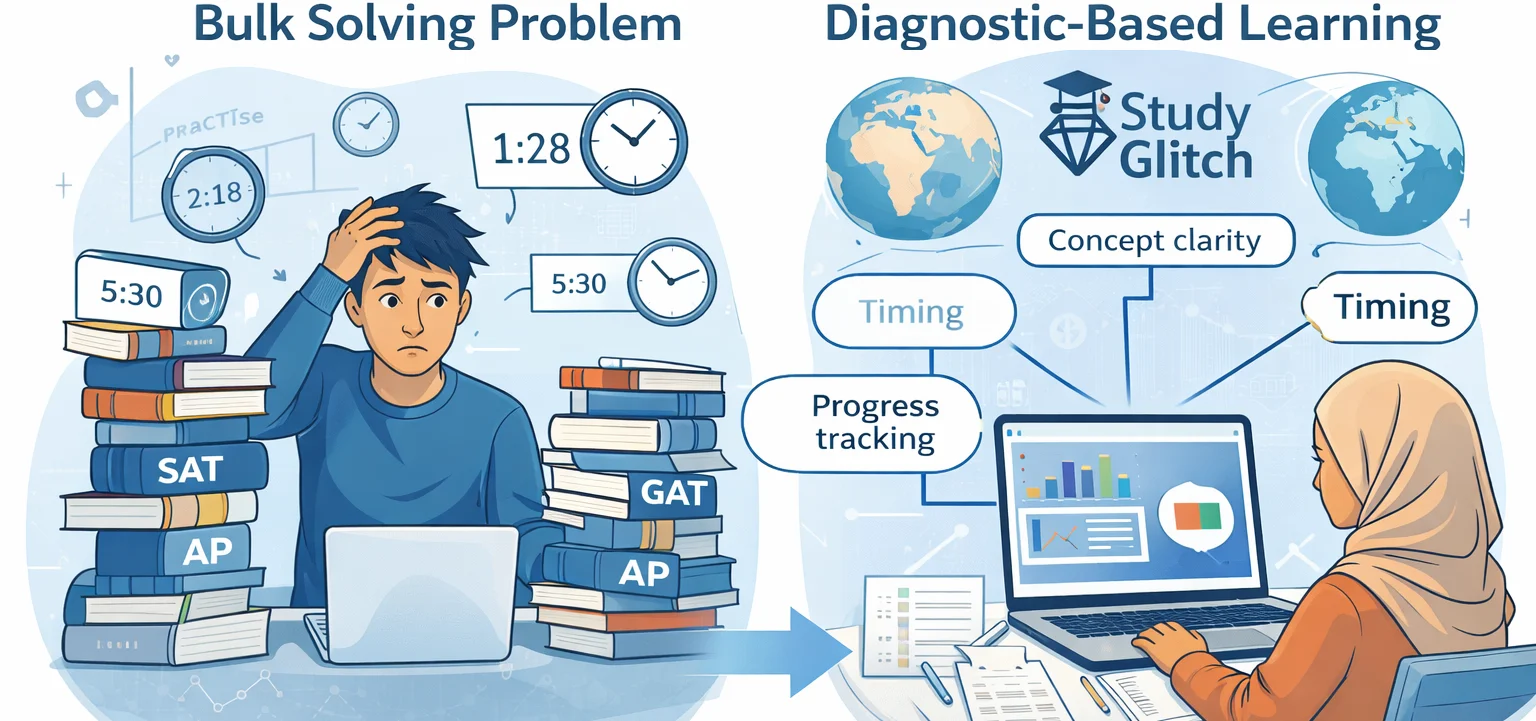
Structured SAT, GAT (Qudurat), and AP Math preparation in Saudi Arabia starts with diagnostic clarity—not bulk solving. Discover a smarter strategy.

Motivation fades quickly, especially in math exam preparation. Real progress comes from structured learning built around diagnostic tests that expose gaps early and track improvement over time. This is the foundation behind how StudyGlitch approaches math tutoring and exam prep in Saudi Arabia and t

Many students solve hundreds of math questions but see little to no score improvement. The problem isn’t effort — it’s how practice is approached. Here’s why more questions don’t always mean better results, and what actually helps.

students study hard for the SAT, AP, or GAT but still feel stuck. This article explains why hard work alone does not guarantee better scores, how the illusion of understanding affects performance, and what actually leads to real improvement through metacognition, diagnosis, and structured practice.