
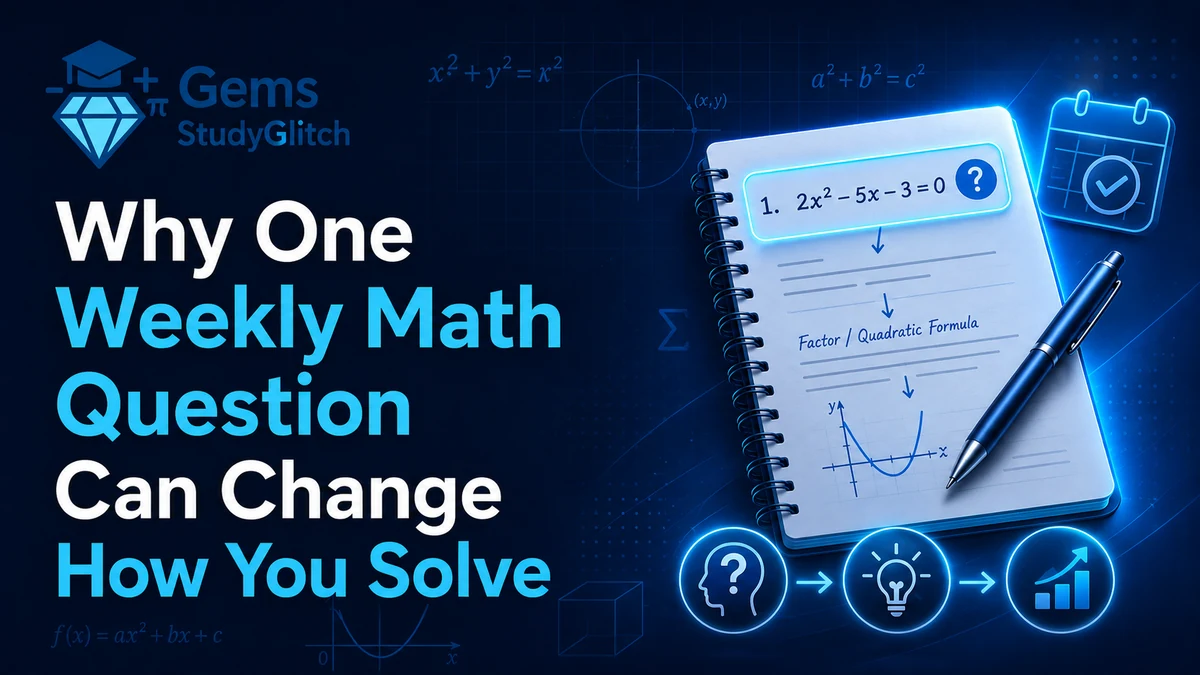
Why One Weekly Math Question Can Change How You Solve
One weekly math question can help students notice traps, compare methods, and discuss better solution paths inside the StudyGlitch Hub.
Ideas, systems, and thinking behind a smarter future of learning.

One weekly math question can help students notice traps, compare methods, and discuss better solution paths inside the StudyGlitch Hub.
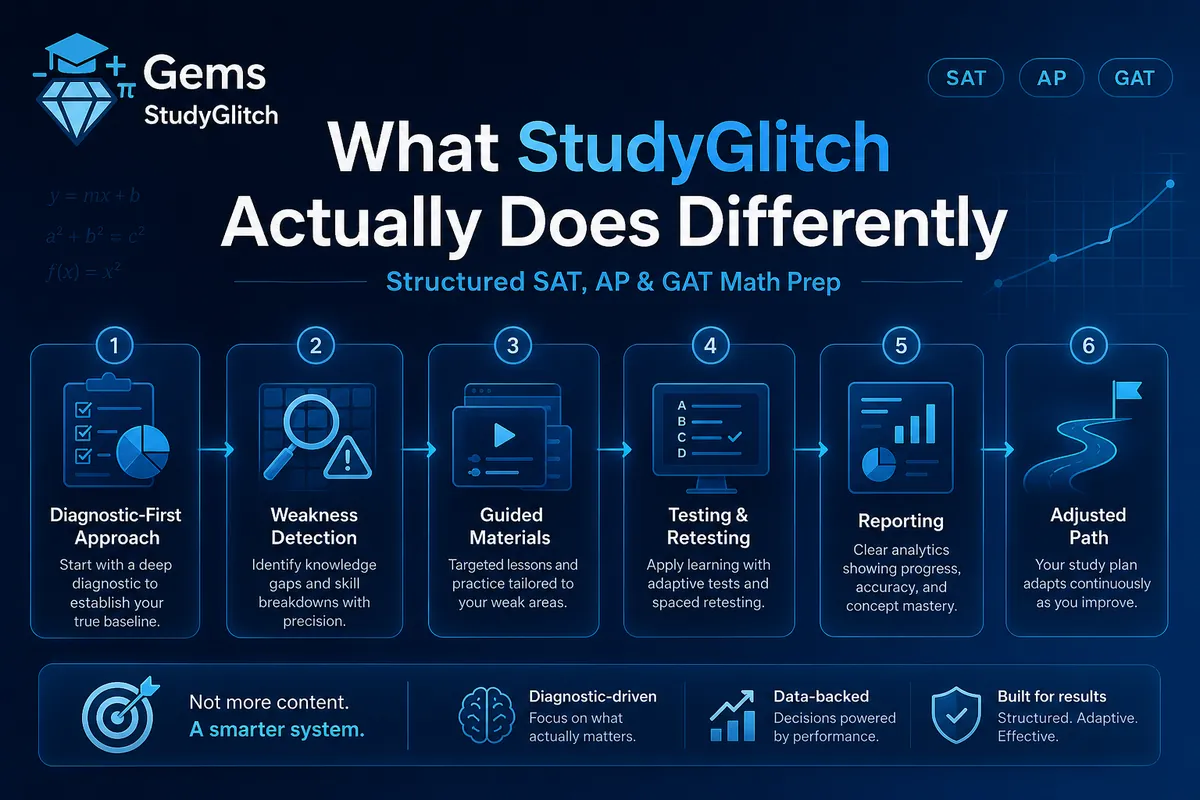
StudyGlitch is not built around random practice or generic tutoring plans. It uses diagnostics, weakness detection, guided materials, retesting, and reporting to give SAT, AP, and GAT math students a clearer and more structured path forward.
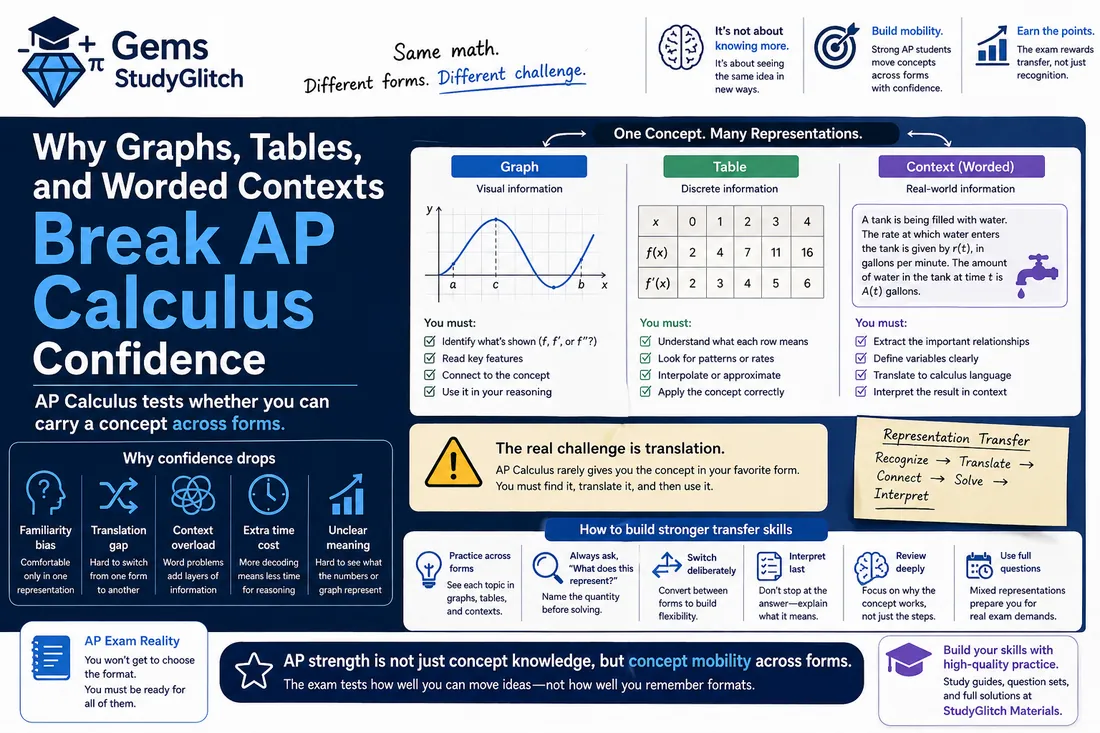
Many AP Calculus AB students understand a concept in algebraic form but lose confidence when the same idea appears through a graph, table, or worded context. The real challenge is representation transfer: carrying calculus ideas across forms.
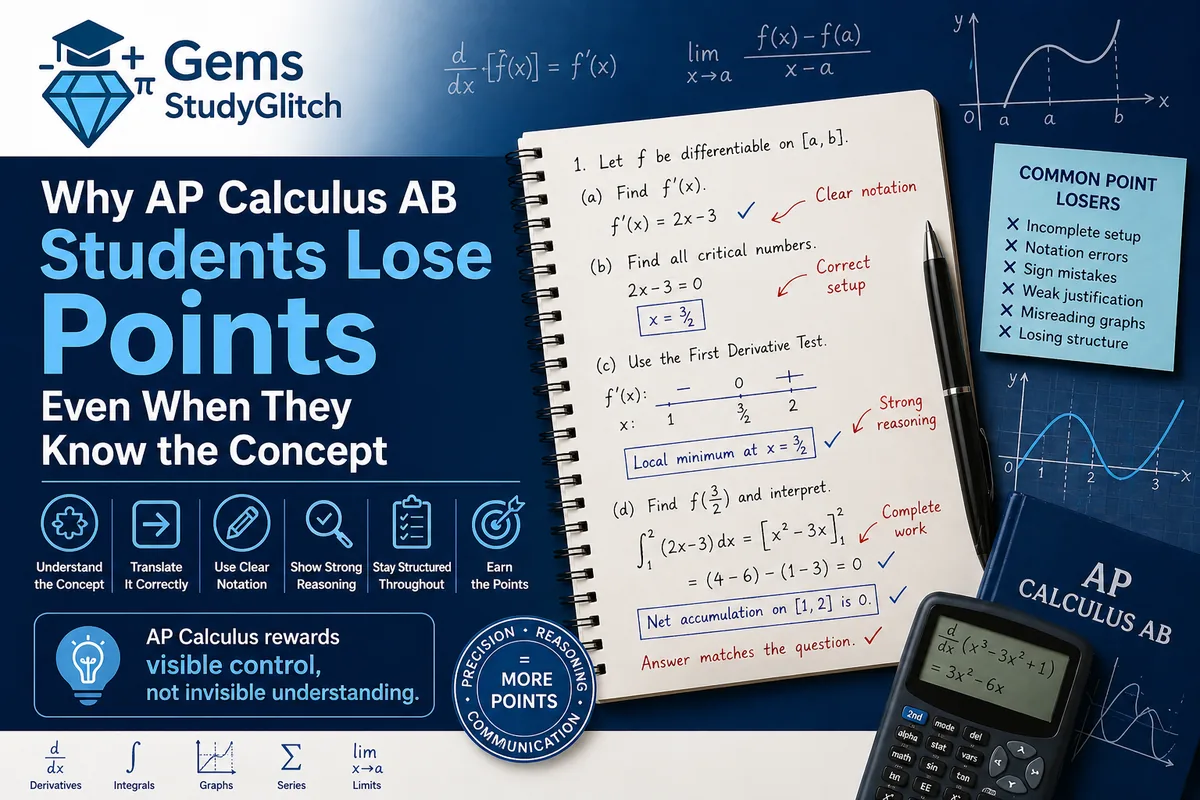
Many AP Calculus AB students understand the concept but still lose points because the exam rewards visible mathematical control: setup, notation, reasoning, graph/table interpretation, and structured execution under pressure.
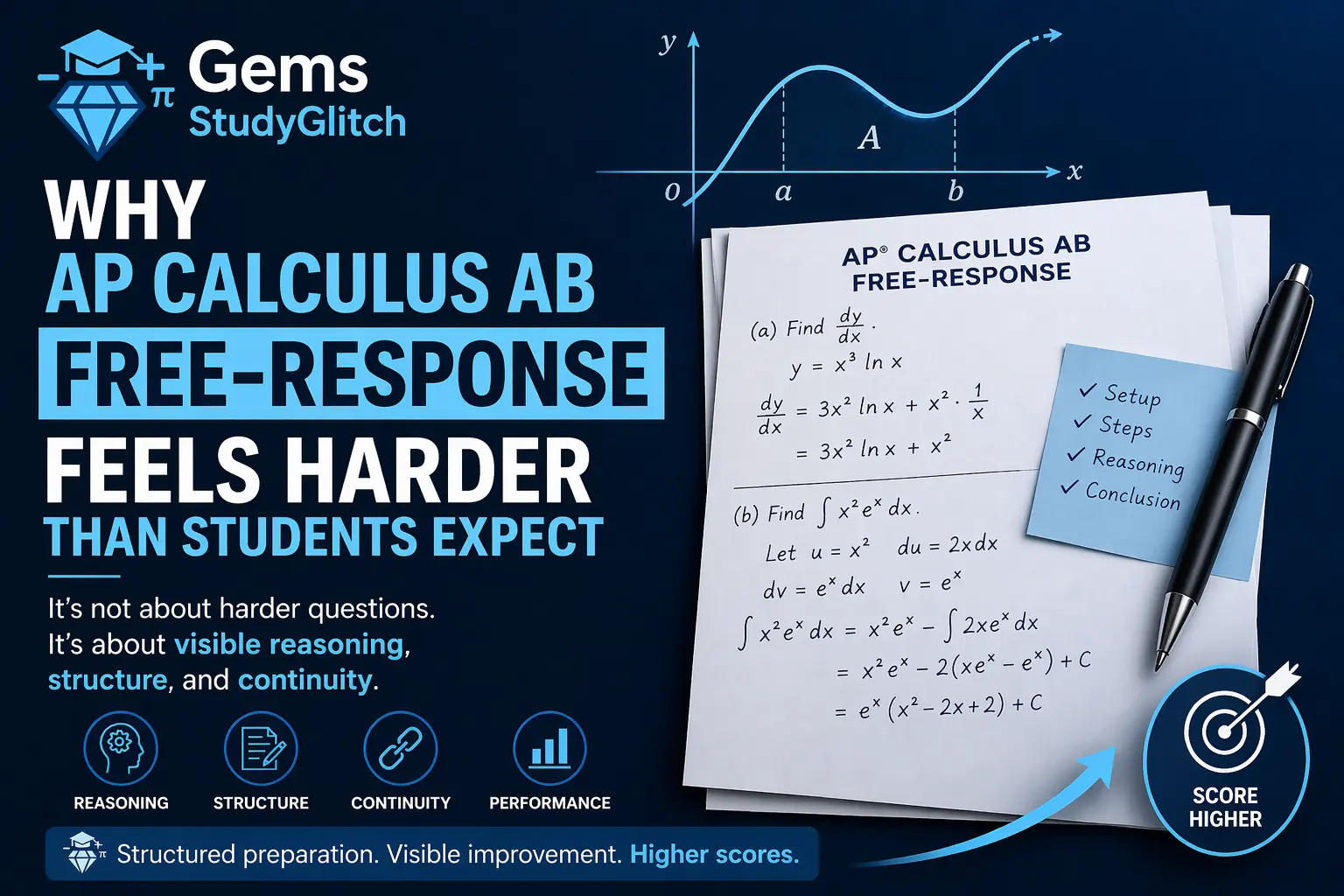
AP Calculus AB free-response feels harder not because the questions are necessarily more difficult, but because they expose reasoning quality, structure, and continuity. This article explains why students struggle with FRQ and how the exam reveals gaps that multiple-choice often hides.
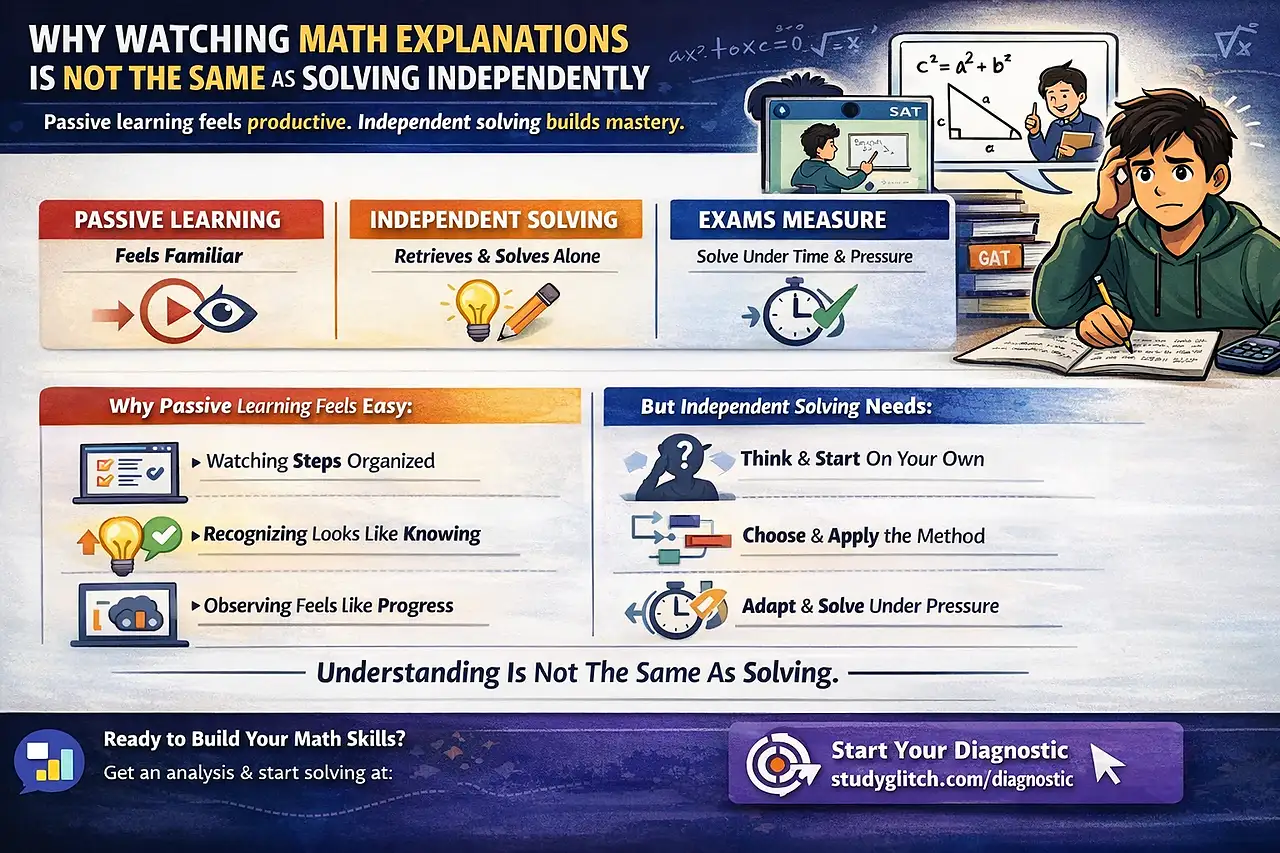
Watching math explanations can feel productive, but exams measure independent problem solving, not passive understanding. This article explains why watching math videos is not enough, how passive learning slows real improvement, & what students need to build independent mastery in SAT, AP, and GAT.
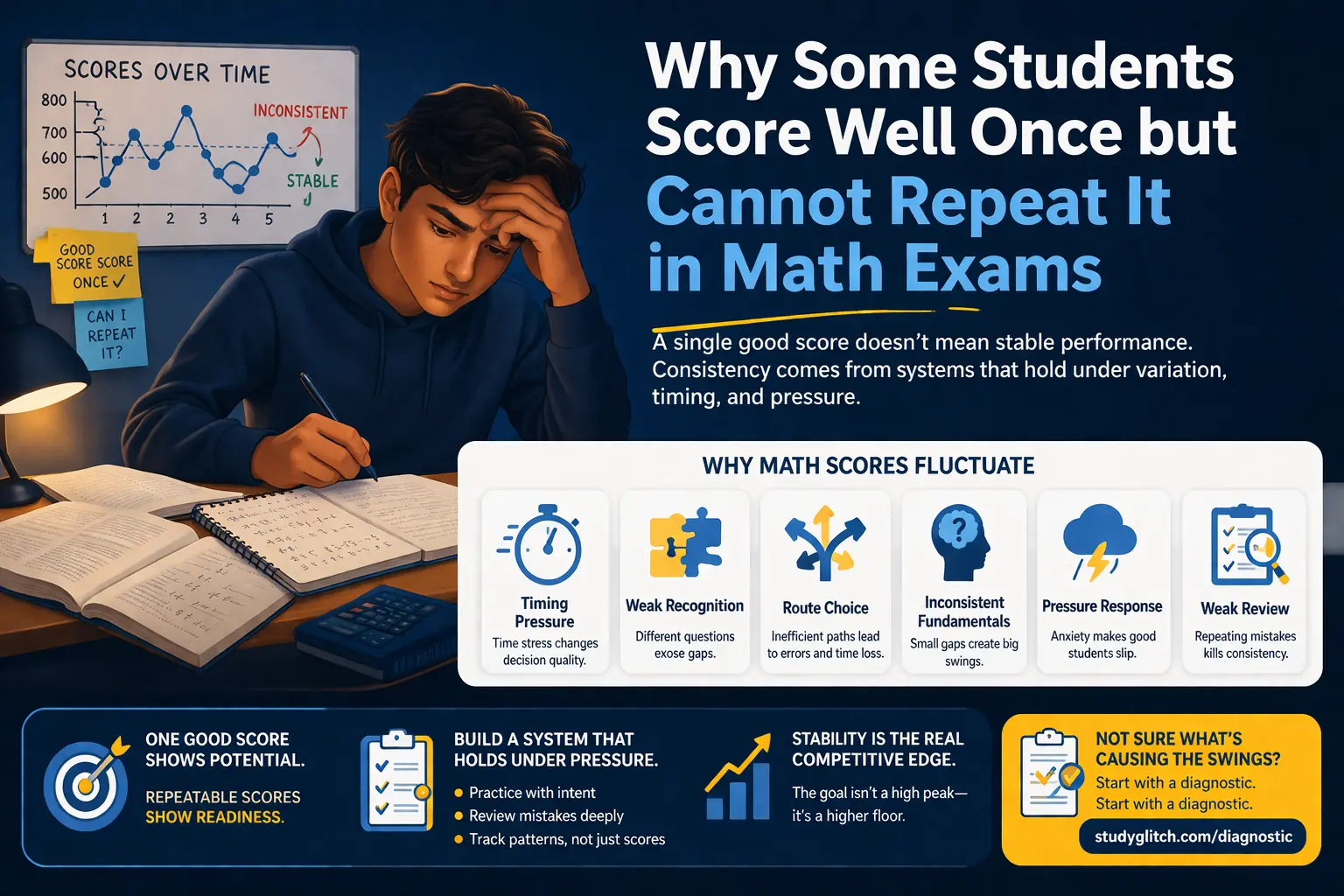
A single good math score does not always mean stable performance. This article explains why math exam scores fluctuate, what causes inconsistent SAT, AP, and GAT results, and why students need preparation systems that stay reliable under timing, variation, and pressure.
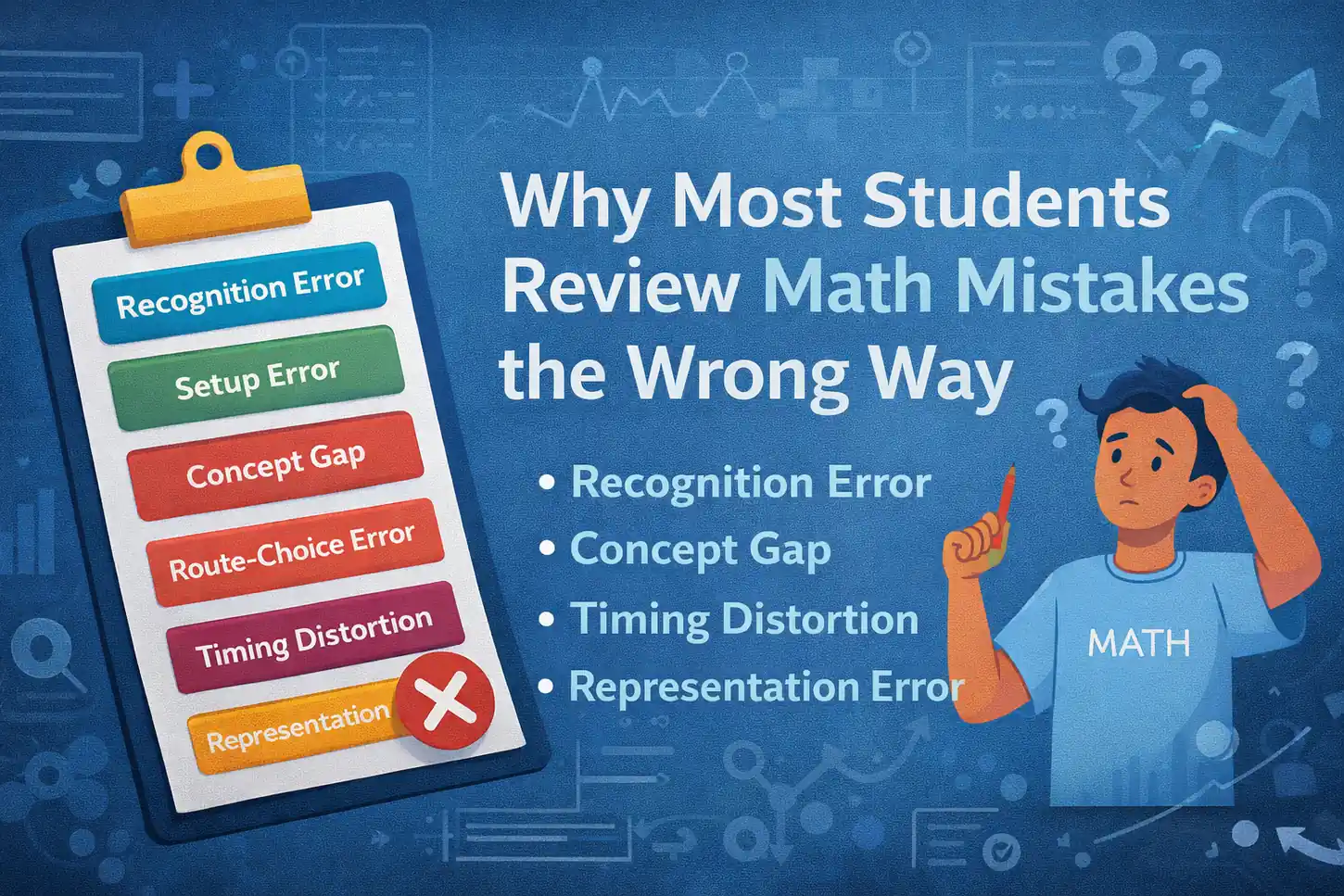
Students often review math mistakes too loosely, which is why the same errors keep repeating. This article explains how to review math mistakes properly through structured error analysis, helping students identify the real cause behind weak performance in SAT, AP, and GAT math.
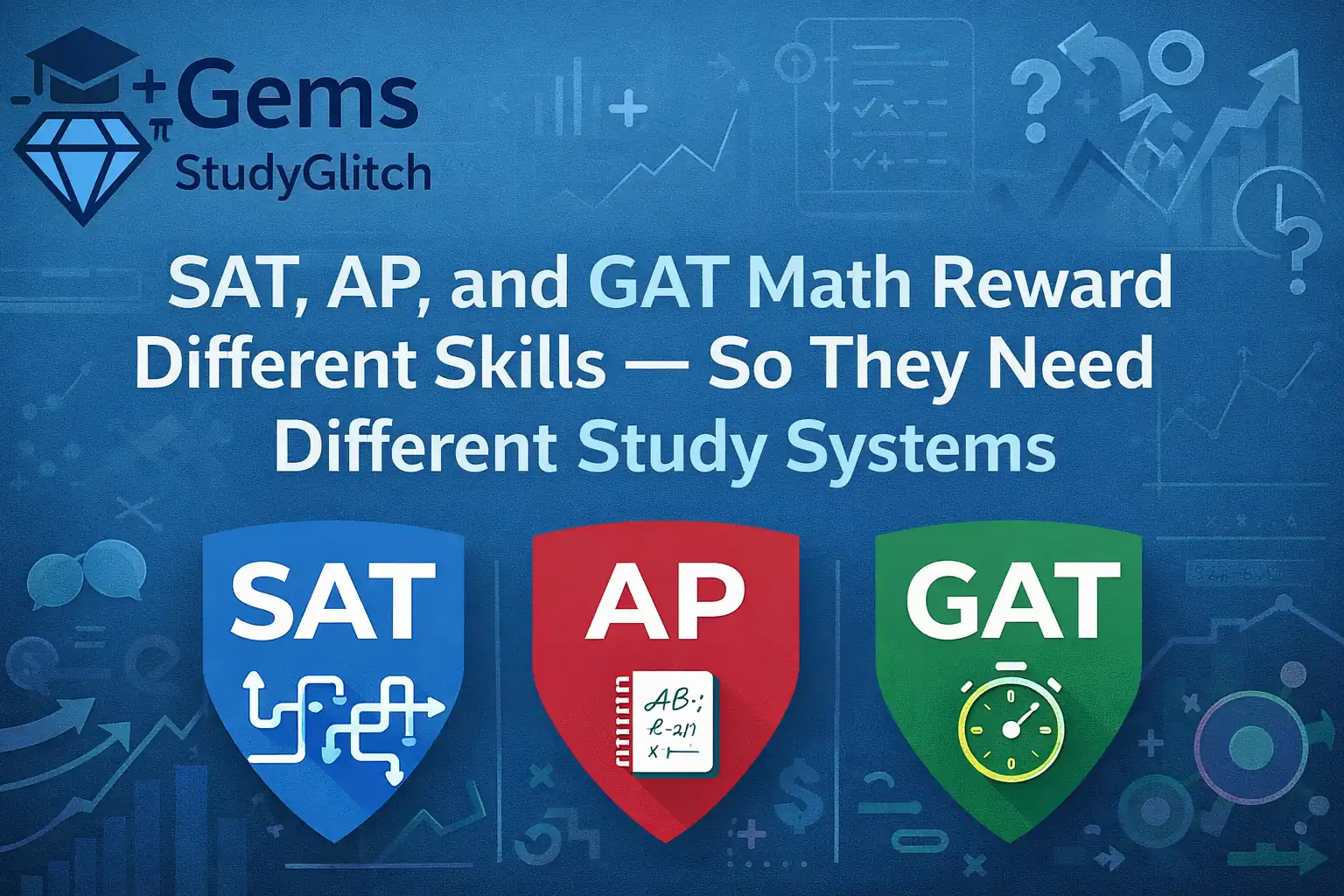
SAT, AP, & GAT math may overlap in content, but they do not reward the same study habits. This article explains why each needs a different prep system, how students underperform when they use the wrong one, & how to choose the right math preparation pathway based on target exam and current weakness.
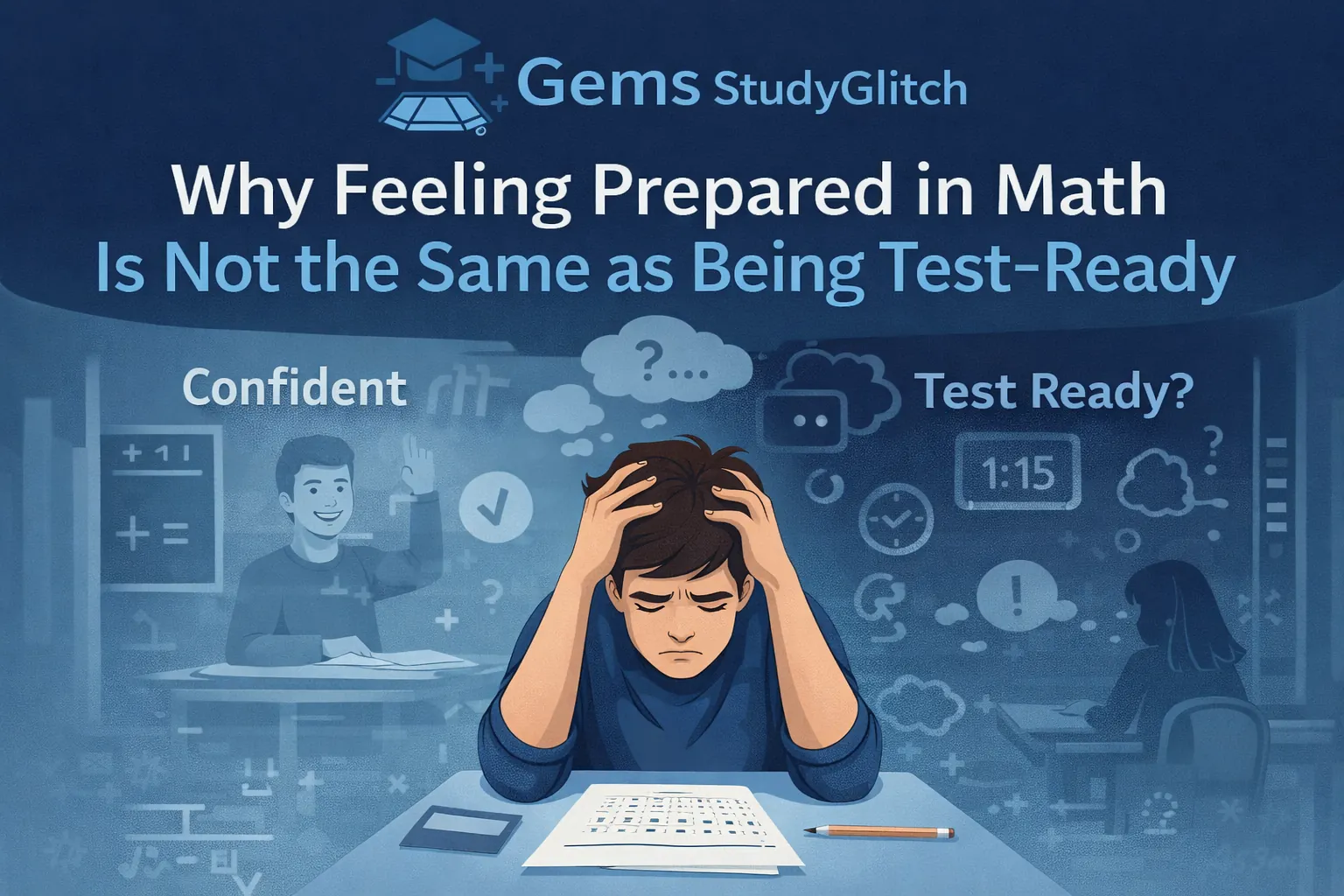
Feeling prepared in math does not always mean being test-ready. This article explains why students can feel confident in SAT Math, AP Calculus AB, or GAT Quantitative prep yet still underperform on test day.
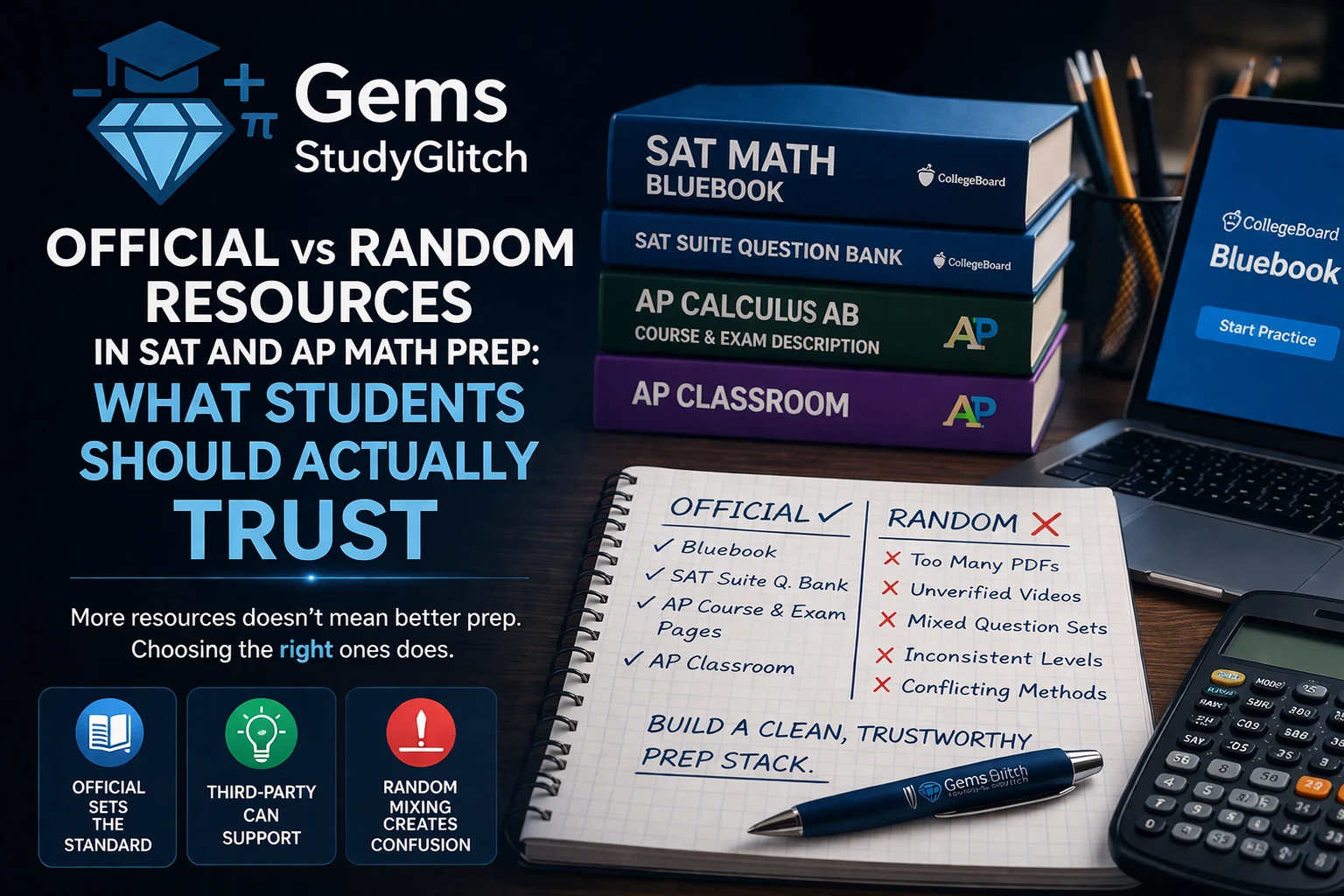
SAT Math or AP Calculus AB get buried under books, PDFs, videos, worksheets, and random question without knowing what actually deserves their trust. This article explains why official resources should anchor preparation, when third-party materials can help, and how to build a cleaner prep stack.
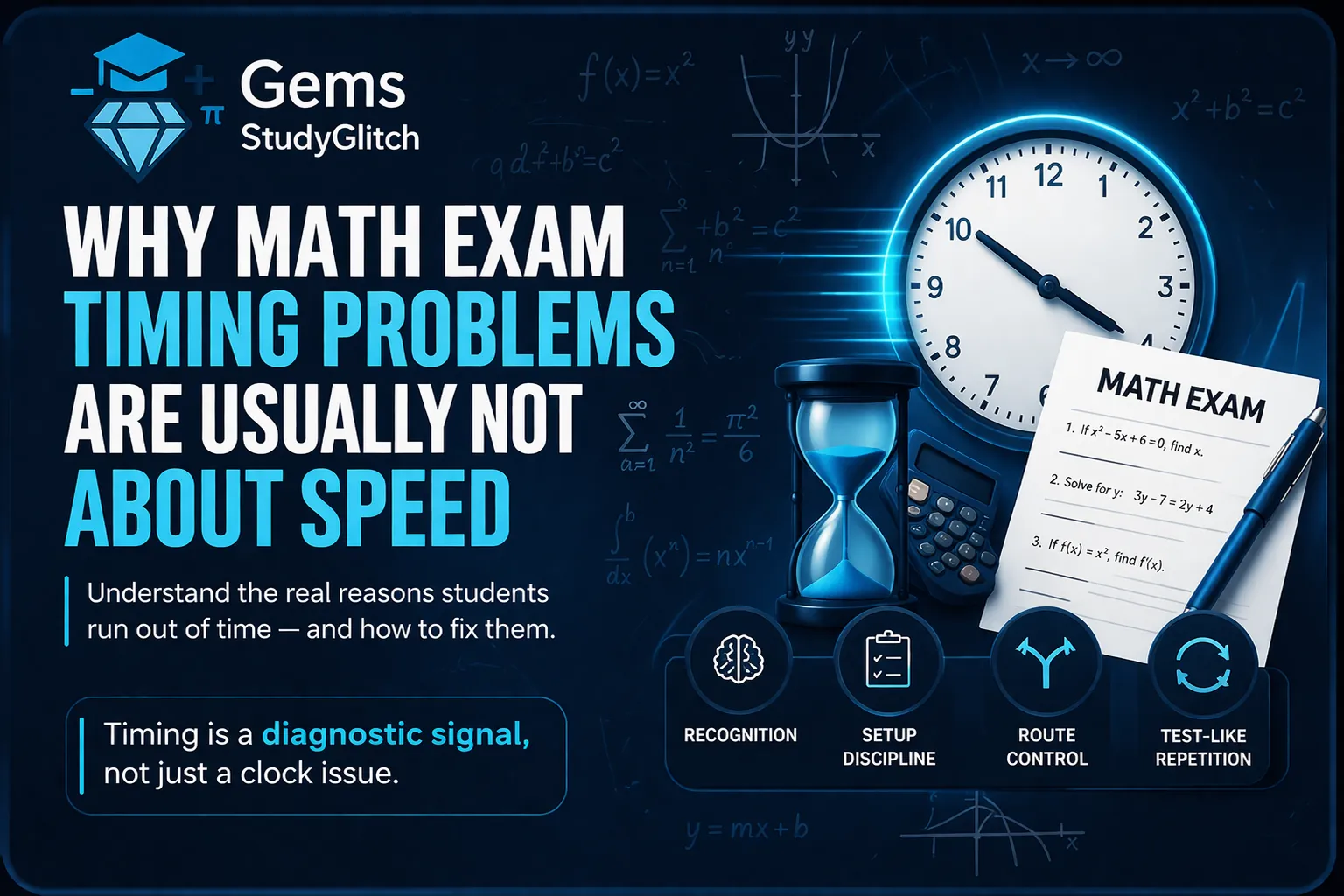
students assume running out of time in math exams means they are simply too slow. In reality, timing problems usually come from hesitation, weak recognition, & poor setup.This article explains why timing should be treated as a diagnostic signal across SAT Math, GAT Quantitative, and AP Calculus AB.
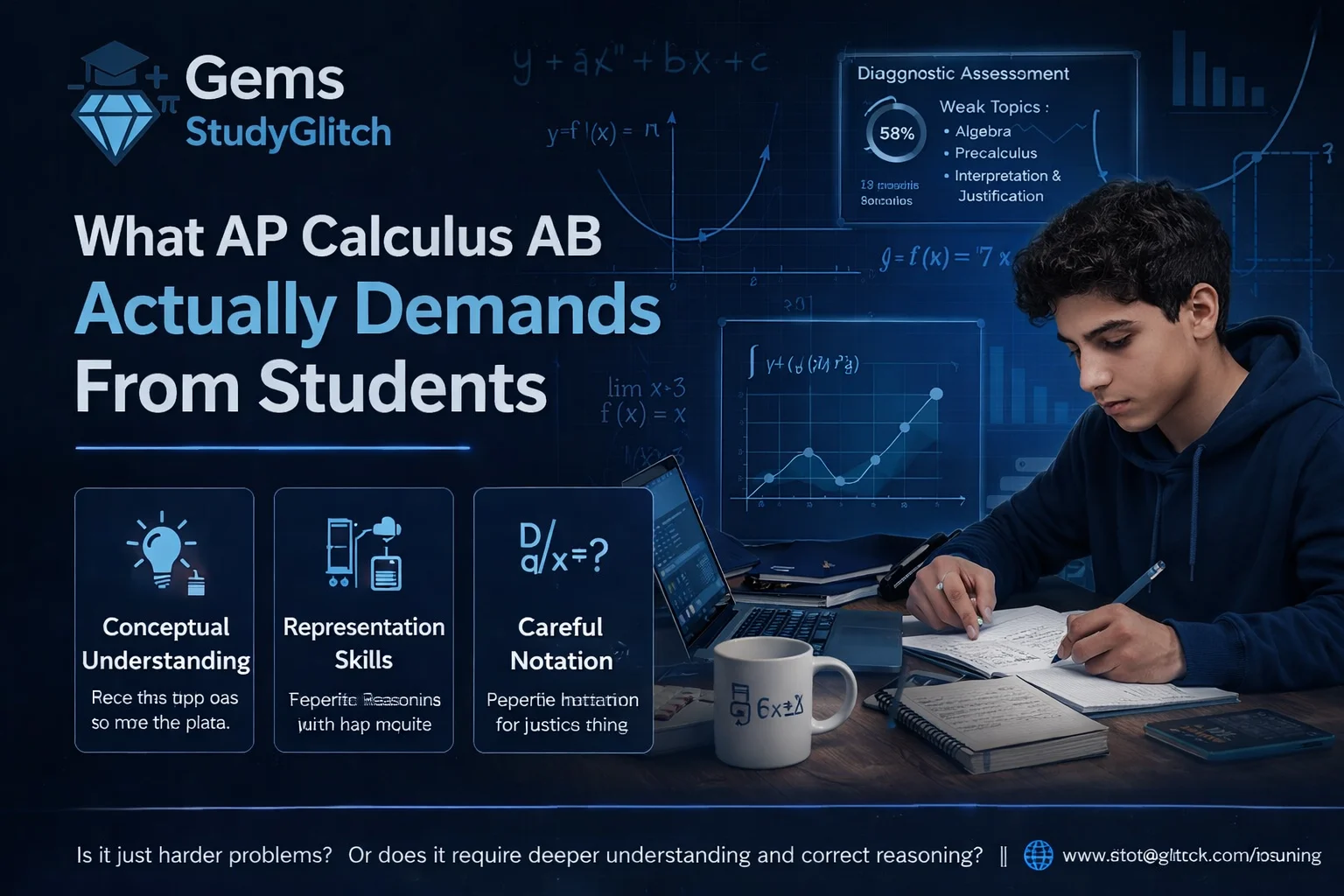
Students assume AP Calculus AB is only about solving harder math problems. In reality, the course demands conceptual understanding, correct notation, representation skills, and the ability to reason clearly under pressure.

Many students and parents search for SAT, AP, or GAT math tutoring without knowing what actually makes tutoring effective. Strong tutoring should begin with diagnosis, target real weaknesses, use a consistent method, and make progress visible over time.
AP Calculus AB improvement comes from fixing the right weaknesses. This article explains why many students plateau, how better practice leads to better score movement, and what a more structured AP Calculus prep path looks like for students in Saudi Arabia and across the Gulf.
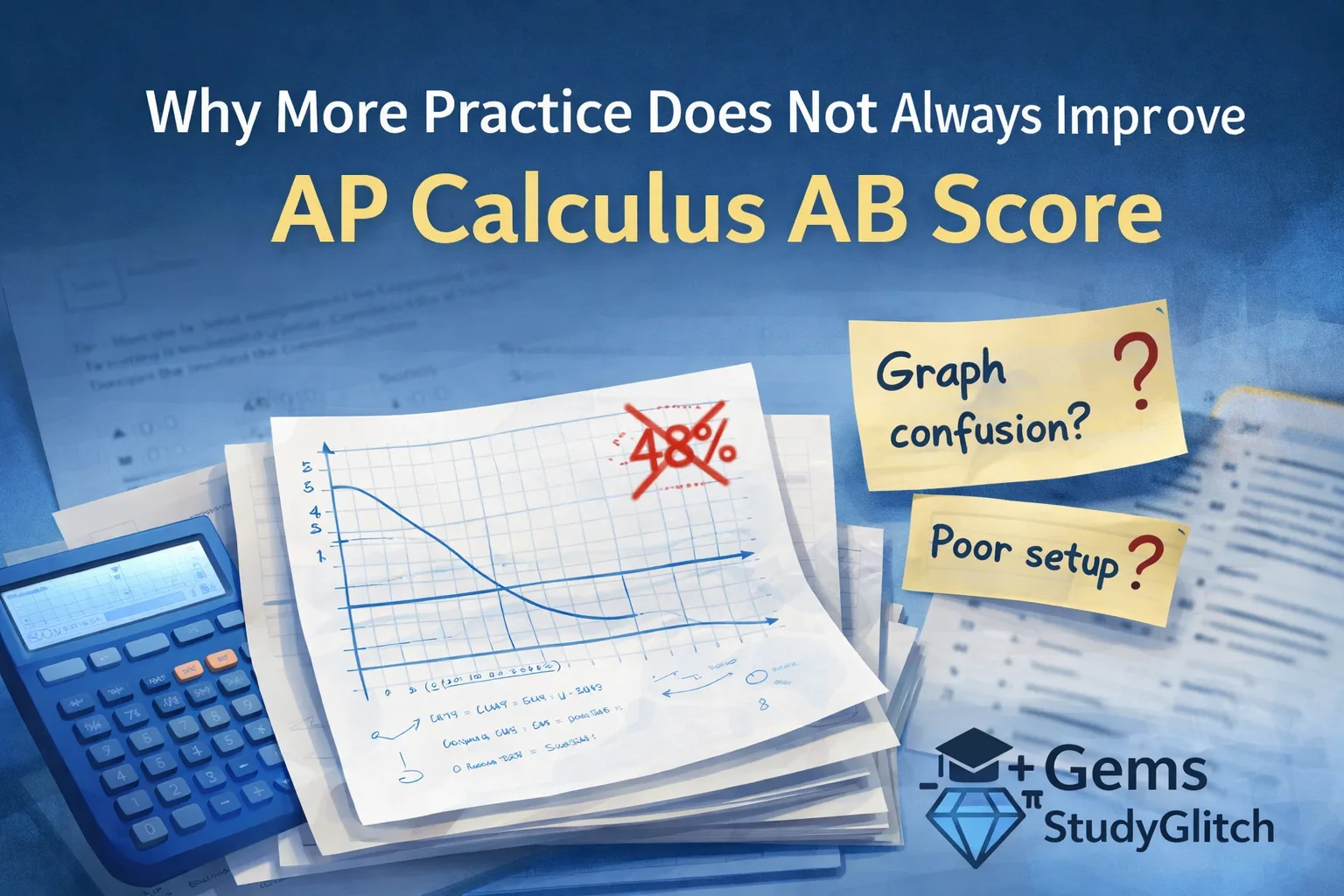
A lot of AP Calculus AB students practice consistently but still see little score improvement. The problem is often not effort. It is structure. When preparation is random, weak topics stay hidden, mistakes repeat, and free-response performance remains unstable. This article explains why better AP C
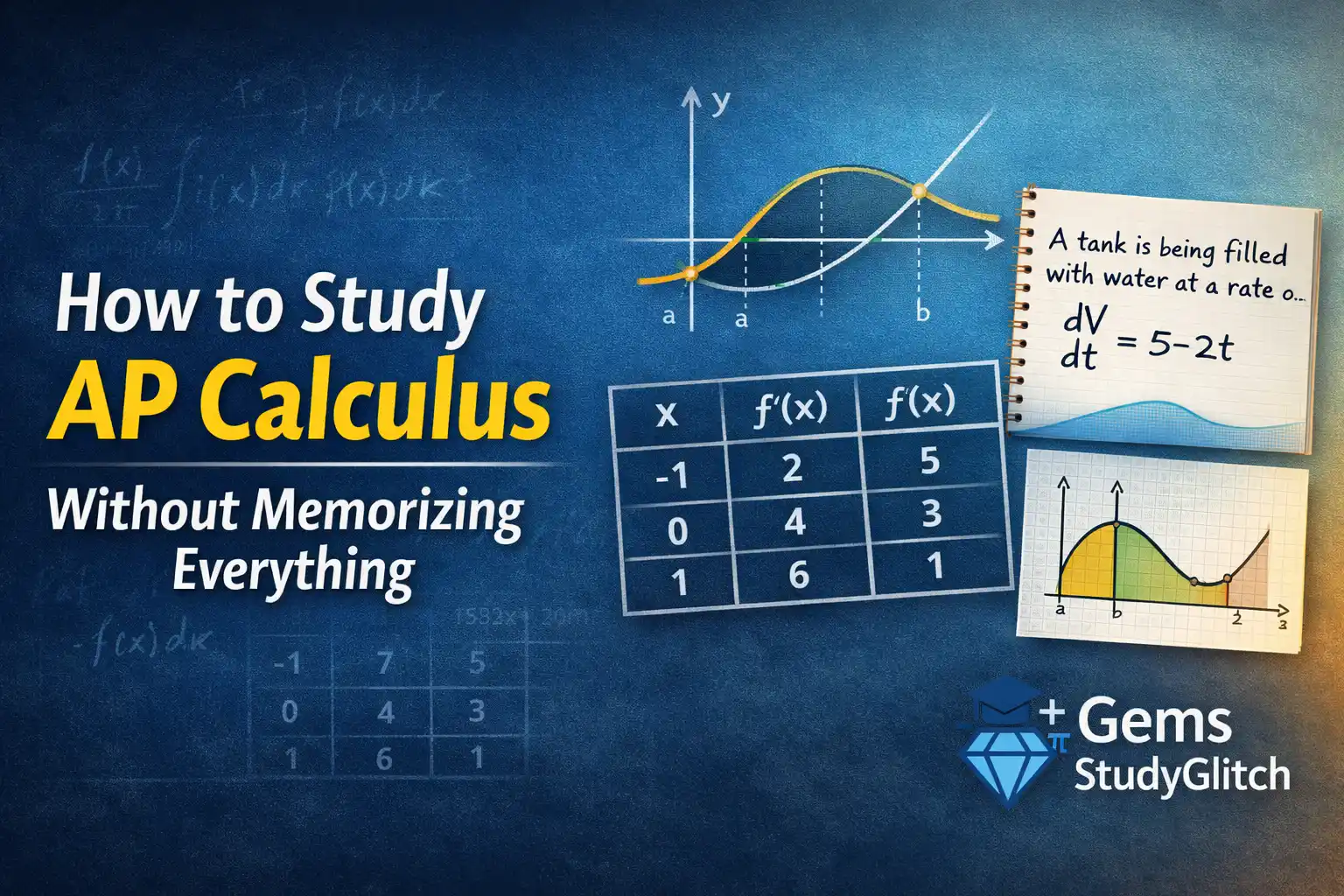
Many students try to survive AP Calculus by memorizing rules, patterns, and procedures, but that approach breaks down quickly when questions shift into graphs, tables, context, and free-response reasoning. Real improvement comes from understanding how calculus ideas connect, not from trying to memor
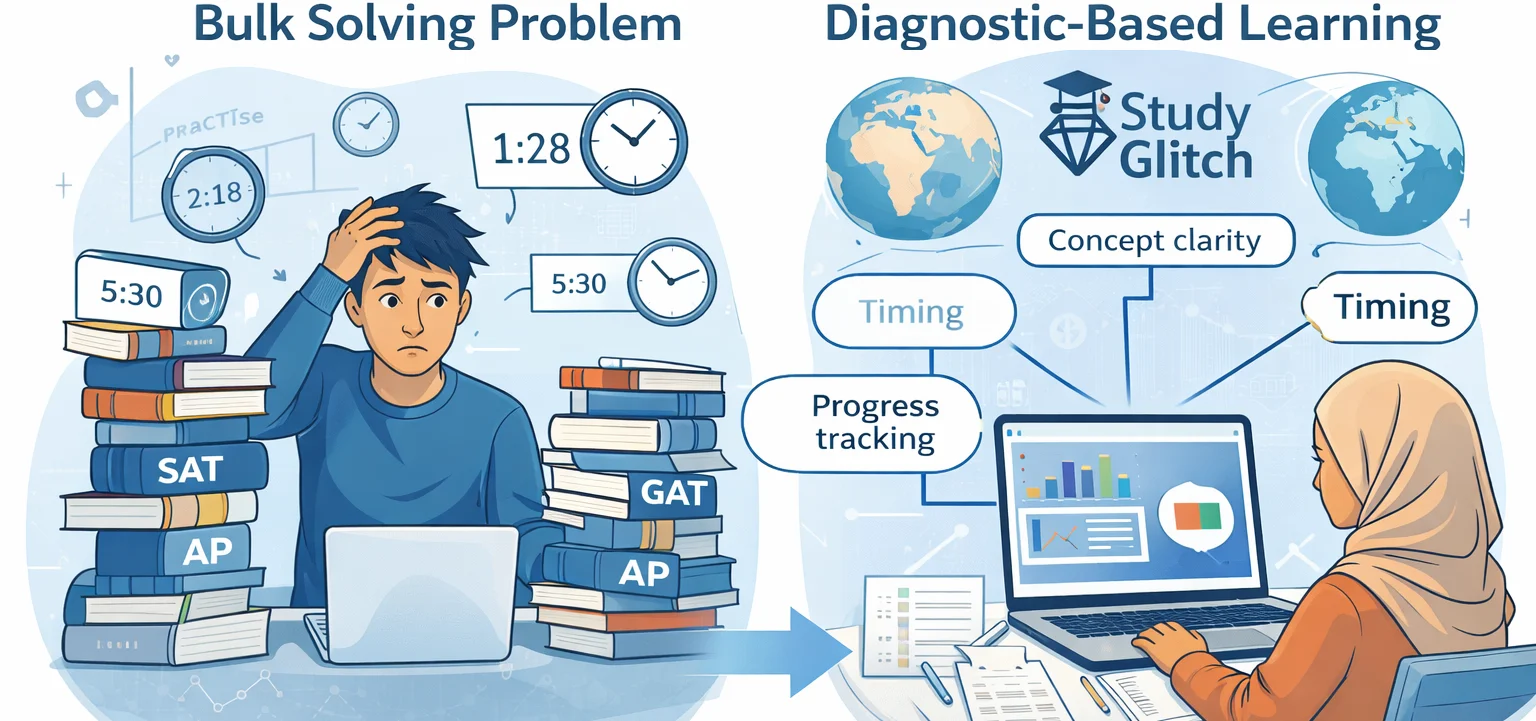
Structured SAT, GAT (Qudurat), and AP Math preparation in Saudi Arabia starts with diagnostic clarity—not bulk solving. Discover a smarter strategy.